A runner who struggled to run at different paces found success using Rate of Perceived Exertion, a subjective effort scale, instead of focusing on specific speed metrics.
The runner completed a guided workout called "Find Your Pace" on the Nike Run Club app led by Coach Cory. Rather than checking pace data on a Fitbit, Coach Cory instructed the runner to use RPE, a 1-to-10 scale where 1 represents sitting on a couch and 10 represents an all-out sprint. Coach Cory suggested targeting an RPE of 6 for a 10K, 7 for a 5K, and 9 for a mile.
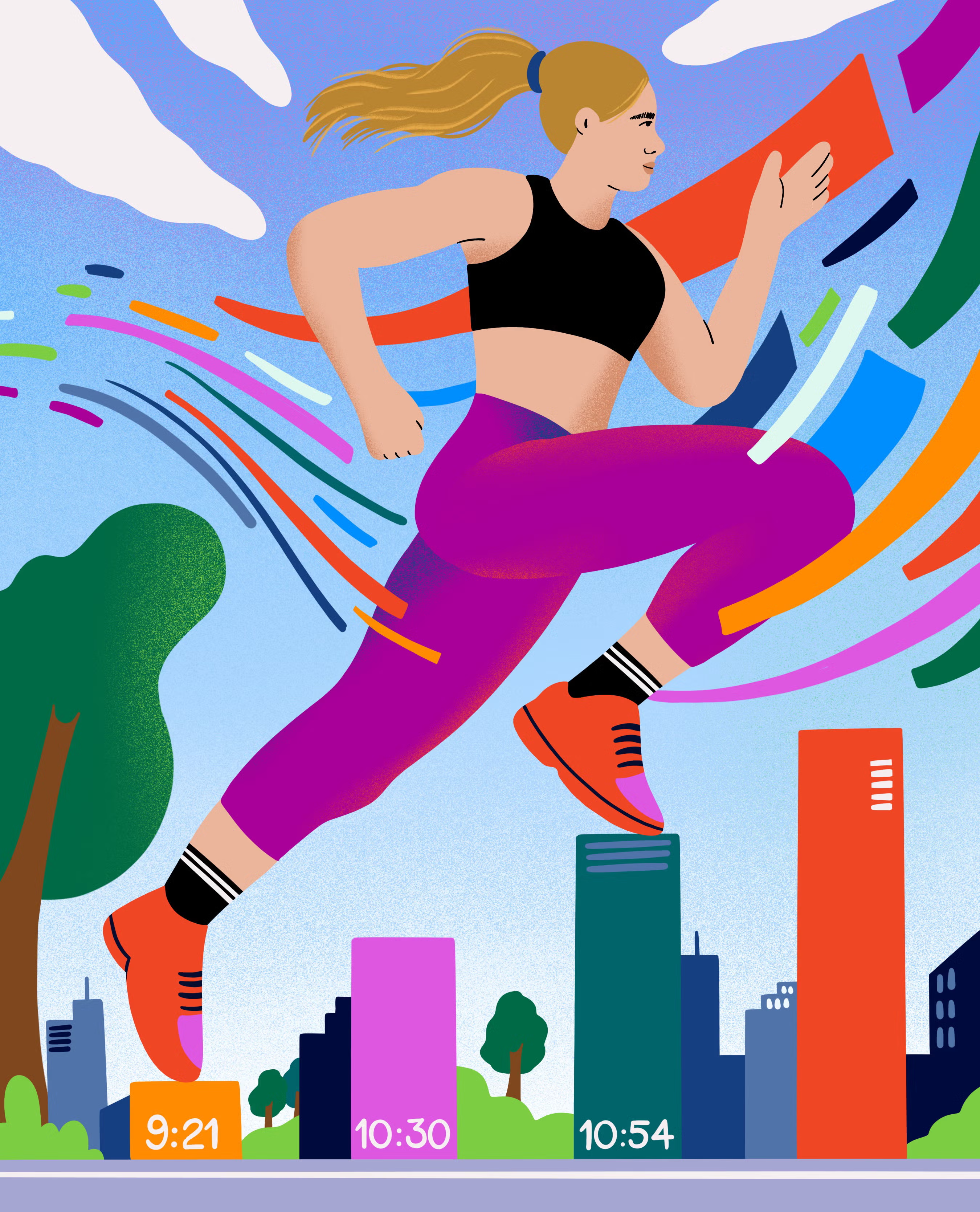
The workout consisted of short intervals run on the same block. The runner was told not to check the app or Fitbit during the run. After completing the 10-minute session, the runner achieved a mile pace of 9:21, a 5K pace of 10:54, and a 10K pace of 10:30, faster than previous training runs or races.
The runner notes that creating different paces through effort levels proved more effective than trying to "find" predetermined paces from a training plan. When focusing on RPE rather than speed metrics, the ability to distinguish between different effort levels translated into actual pace differences across distances.