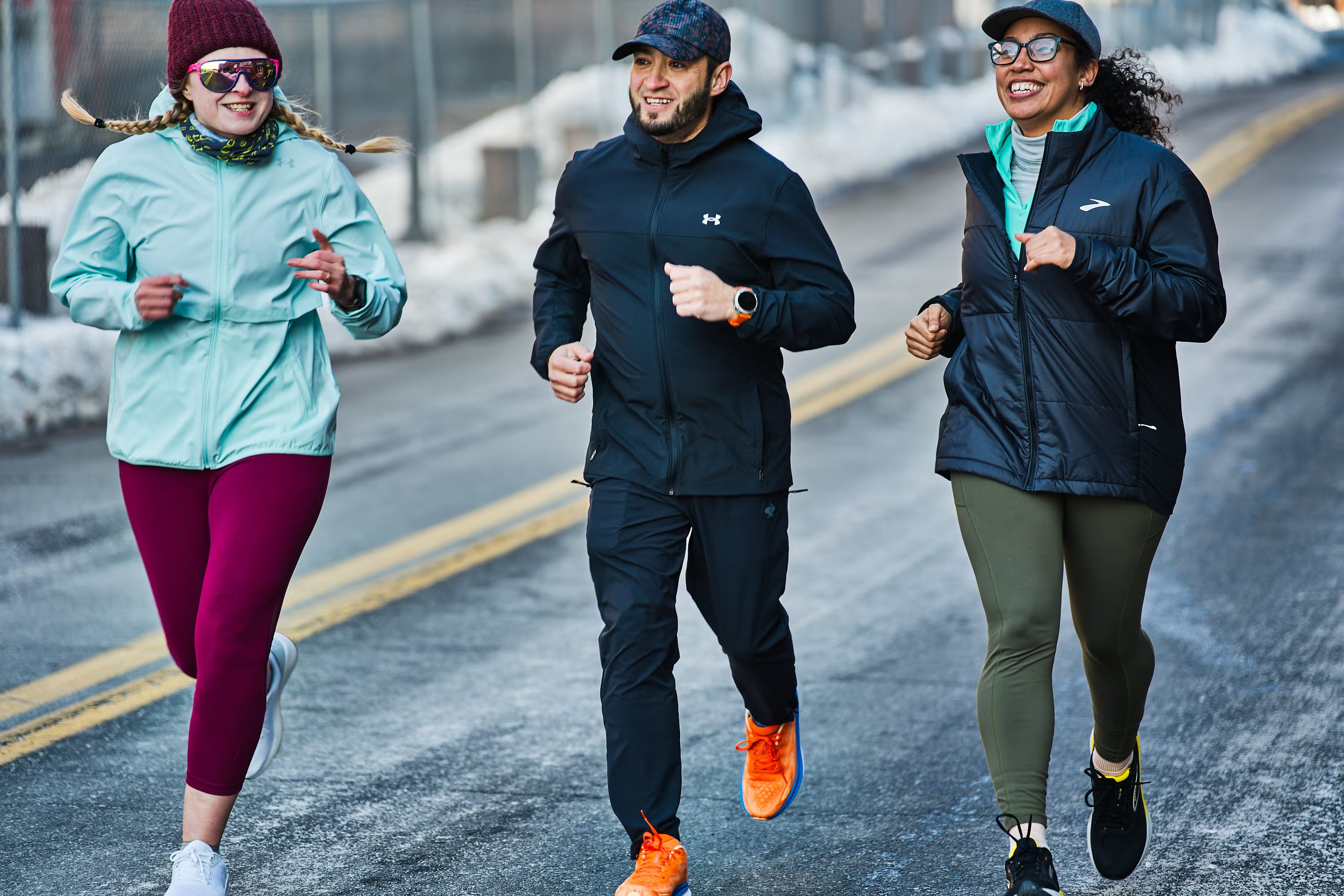
A recent review in Temperature found that cold muscles produce less power and slower nerve conduction, leading to stiffness, reduced power output, and decreased endurance during winter running. Stephen Cheung, PhD, the review's lead author, notes that no single temperature triggers performance decline universally. Instead, performance depends on environmental conditions, heat generation, running speed, and clothing worn. Each runner thermoregulates differently based on wind, moisture, and individual factors.
Heather Milton, CSCS and lead exercise physiologist at Primary MD, suggests runners begin adjusting their preparation when temperatures drop below freezing. Cold triggers vasoconstriction, which restricts blood flow to muscles farther from the core. Cheung explains that cold slows nerve conduction, requiring more effort for the same power output. Cold muscles and tendons become tighter and less elastic, increasing injury risk. Milton uses an analogy: a cold rubber band can snap when pulled.
To run safely in cold weather, Milton recommends warming up indoors first with five minutes of prerun drills. Start with slower, controlled movements like planks with leg raises, lunges with rotation, and hip CARs. Finish with quicker drills such as leg swings and butt kicks to activate nerves rapidly. Indoor warmup increases metabolism and blood flow, preparing muscles for contraction.
Layering matters, but individual tolerance varies. Cheung emphasizes paying attention to your personal cold susceptibilities and adjusting clothing accordingly to avoid excessive sweating. Milton suggests two to three layers of breathable, moisture-wicking fabrics with a wind- and water-resistant outer shell. Wear shorts over tights, cover exposed skin on head and ears, and choose wool socks.
During your run, gradually build to your usual pace rather than starting at goal intensity. Milton advises matching your rate of perceived exertion to your typical effort instead of targeting your usual pace. If you feel cold, speed up slightly to generate metabolic heat, but avoid forcing effort in icy conditions or when muscles feel stiff. Cheung warns against taking long breaks, as this reduces heat generation. Routes with tree coverage can block wind on blustery days.
Immediately after finishing, change out of sweaty clothes into warm, dry fabrics. Milton stresses removing even small amounts of moisture from your skin to prevent chilling.