Most of us spend our leg days with our feet planted firmly in one spot. We squat. We deadlift. We stay stationary. But here's the uncomfortable truth: your legs are built for movement, whether you're running, walking, or jumping. So why do most go-to leg exercises have you planting your feet in one spot? The walking lunge deserves far more attention in your training arsenal than it currently receives, and Men's Health fitness director Ebenezer Samuel, C.S.C.S. makes a compelling case for why.
The walking lunge is a truly dynamic lower-body exercise that exposes muscle imbalances, trains balance and coordination, and challenges your core and upper body more than you might expect—all while attacking every muscle in your legs, including your calves, hamstrings, quads, and glutes. Unlike the dreaded Bulgarian split squat, it's a unilateral exercise that actually gets you moving. Samuel emphasizes that the greatest benefits of the walking lunge come from how it challenges us while in motion. Every step forward challenges your front leg to decelerate your body in space and then quickly work to accelerate into the next step. That's building coordination and balance while training almost every lower-body muscle and building serious strength.
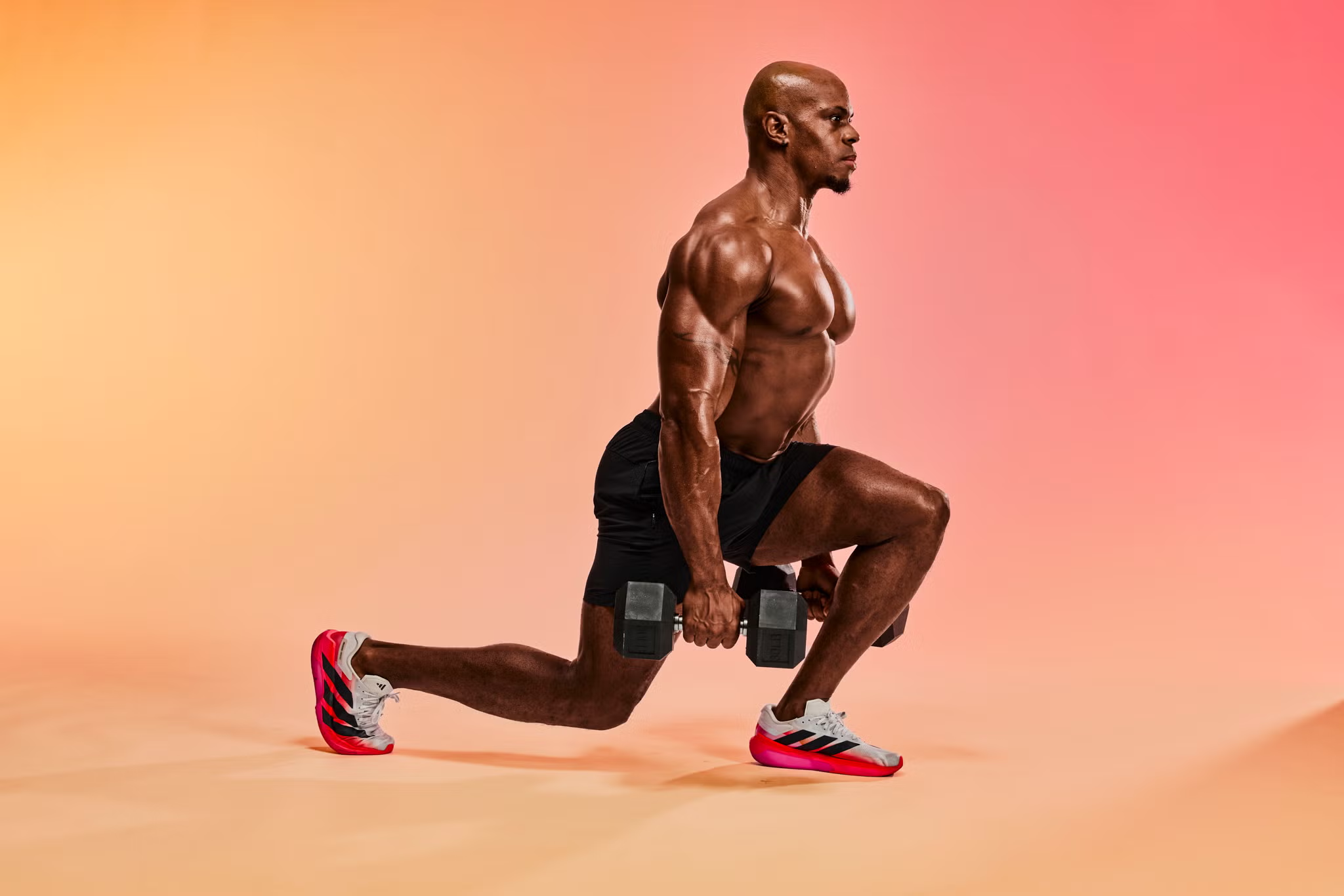
Form matters enormously here, and Samuel is uncompromising about it. Stand with your feet shoulder-width apart, squeeze your glutes and shoulder blades, and keep your gaze at a neutral spot straight ahead. Land on the heel of your foot first to provide a strong base, and aim for a vertical shin as you lower down to the ground. When you get up from the lunge, avoid using momentum—no shoulder or torso rocking. And don't obsess over keeping your torso too upright; especially with heavier loads, a slight forward lean can help you capitalize on your glutes, one of your strongest muscle groups.
The loading options expand the exercise's utility significantly. You can hold weights at your sides, in a front rack position by your shoulders, or in a goblet position with one heavy dumbbell at your chest. Regardless of how you hold the load, Samuel insists on keeping your upper body tight. Grip the dumbbells like you mean it, squeeze your shoulder blades, and tighten your abs. The stride length itself becomes a training variable: smaller steps attack your quads more, while larger steps build hip mobility and knee health—though Samuel recommends going lighter with longer strides.
Aim for 3 sets of 8 to 10 reps per leg, 1 to 2 times a week. If you're short on time or in a hotel room, bodyweight walking lunges done for 45 seconds with 15 seconds rest for 5 minutes will break a sweat and build muscle. The walking lunge is a great way to sneak in movement on leg day if most of your lower-body exercises have both feet anchored to the ground. It's time to get your legs moving again.