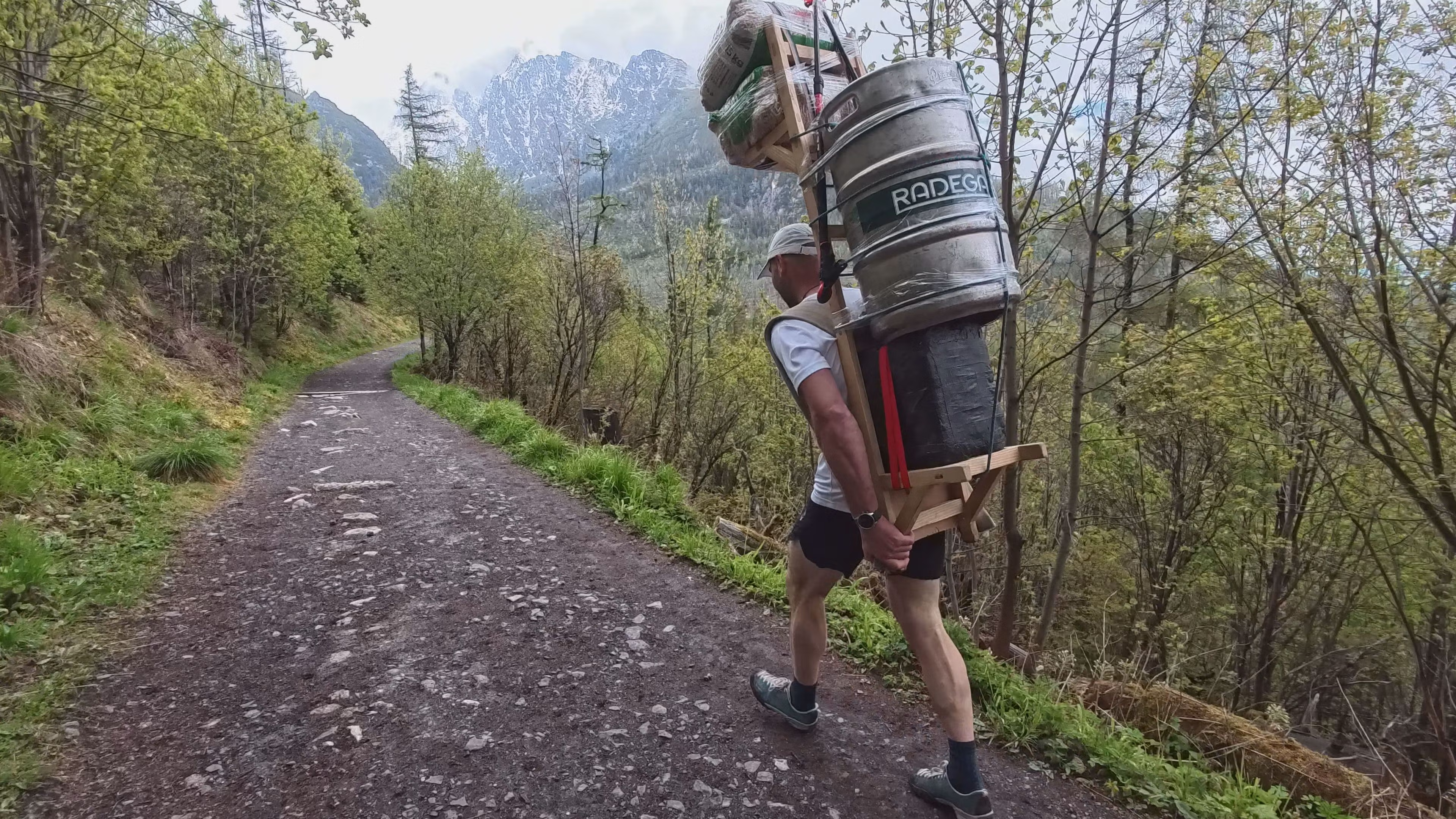
When runners toe the line at the Sherpa Rallye on October 24 in Slovakia's High Tatras mountains, they are not competing for personal glory or a finish-line photograph. Male competitors shoulder a traditional wooden carrying frame loaded with a 30-liter keg of beer plus water and supplies totaling more than 130 pounds. Women carry cases of beer and materials weighing about 44 pounds. The 3.5-mile course climbs steep and rough terrain to Zbojnícka chata, a mountain refuge perched high above the town of Starý Smokovec. What awaits at the summit is not celebration—it is the profound satisfaction of having done work that matters.
Since 1985, this unique annual race has been taking place on the unforgiving flanks of the High Tatras, honoring the traditions of Europe's last remaining group of old-school mountain porters. The race was started by a porter named Viktor Beránek to bring workers together. These mountain carriers—locally known as horský šerpa, though more correctly called horský nosi—manually transport heavy supplies each season to the mountain huts and chalets that hikers depend on for shelter. They are the backbone of mountain tourism in the region, yet their work often goes unnoticed by the casual trekker.
The genius of the Sherpa Rallye lies not in its novelty but in its honesty. Runners do not get to drink the beer they carry up the mountain—it goes into storage for winter use at the refuge. There is no personal reward waiting at the finish line, no self-congratulatory moment. Instead, there is the knowledge that the supplies transported will sustain the mountain infrastructure that enables others to safely explore these peaks. This is fitness stripped of narcissism.
In an era when endurance sports have become increasingly individualized—chasing personal records, social media clout, and sponsorship deals—the Sherpa Rallye reminds us that the most meaningful physical challenges are those tied to genuine community needs. These runners are not training for themselves; they are participating in the actual work that keeps mountain communities functioning. That distinction transforms a brutal race into something far more significant.
More endurance events should take note. The fitness industry has built itself on the promise that personal achievement is the highest calling. But the Sherpa Rallye proves that when we channel our strength and determination toward sustaining the places and people we care about, the experience becomes something transcendent. That is what real endurance looks like—not the finish line, but the supplies stocked for winter.