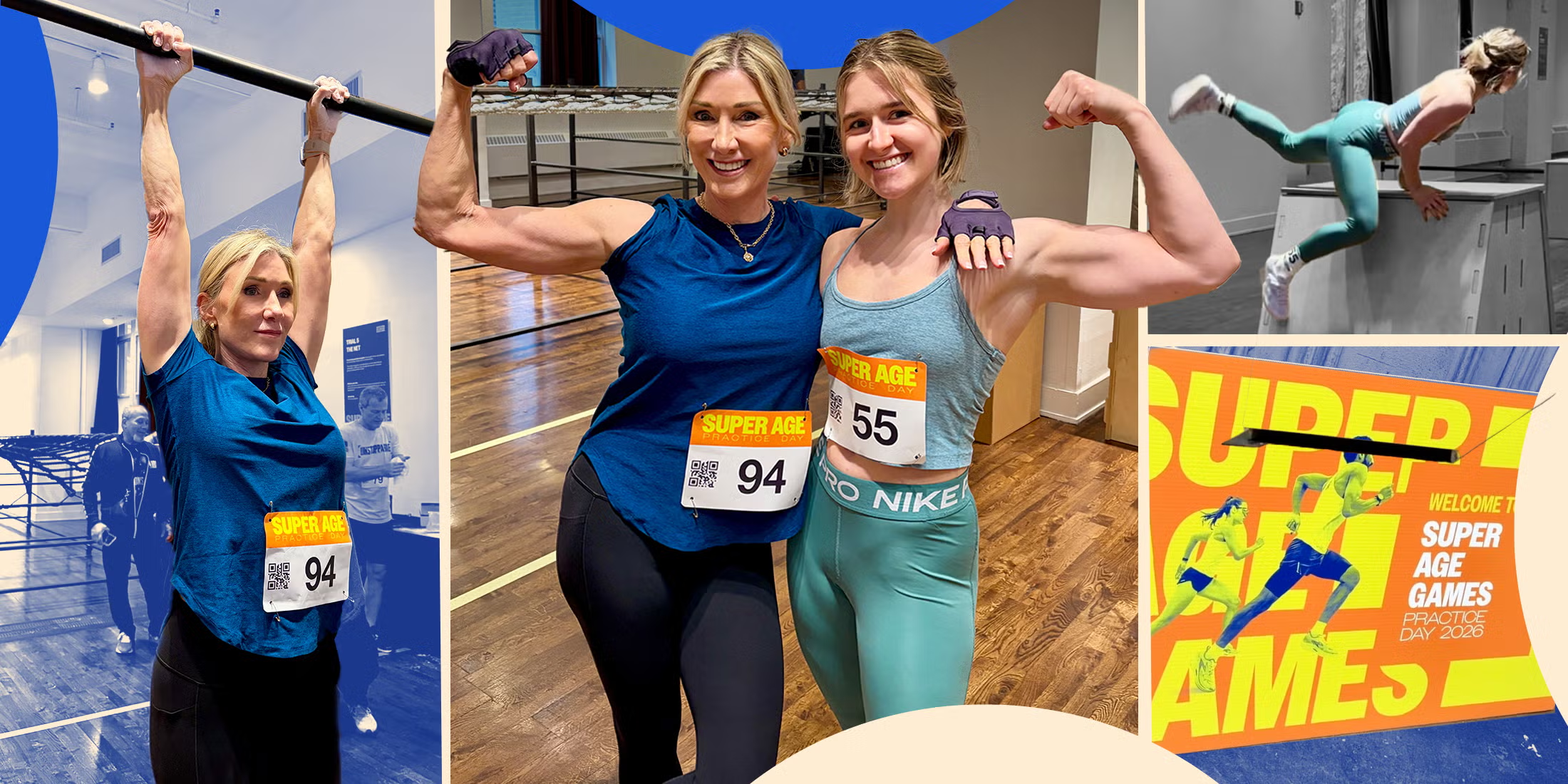
The Super Age Games, a live longevity fitness competition held in New York City on November 7, tested eight markers believed to predict how long people will live well: grip strength, aerobic capacity, agility, balance, functional strength, memory, and relational capacity. Participants received personalized longevity training tips based on their results.
A journalist and her 64-year-old mother tested the trials at a practice day before the main event. Both described themselves as lifelong gym-goers who trained a few days a week with strength training and cardio, yet discovered gaps in their fitness routines after taking the tests.
In the agility trial, participants jumped over and crawled under four gates set 10 meters apart as fast as possible. The journalist finished in 80 seconds and her mother in 73. Their feedback stated that agility is above average and recommended adding directional hops, line drills, lateral shuffles, and single-leg hop overs to improve quickness and prevent falls.
For memory, they completed a six-minute NeuroTracker cognitive training game tracking moving balls on a screen. The mother scored near-perfect while the journalist had room for improvement. The recommendation was brisk walking for 30 minutes, three to five times per week, paired with memory or reaction games. Aashaun Khedaru, exercise physiologist supervisor at the Sports Performance Center at NYU Langone Health, noted that aerobic exercise has been associated with improved cognitive function in older adults.
The balance trial required walking forward and backward on a 12-foot beam while holding a 10-pound water-filled tube with as few steps as possible. The journalist took 49 steps; her mother took 30. Super Age Games feedback recommended standing on one leg for 30 seconds per side daily, then with eyes closed, plus adding lunges and single-leg deadlifts. A small study showed middle-aged women who did eight weeks of lunge exercises improved lower extremity strength and balance.