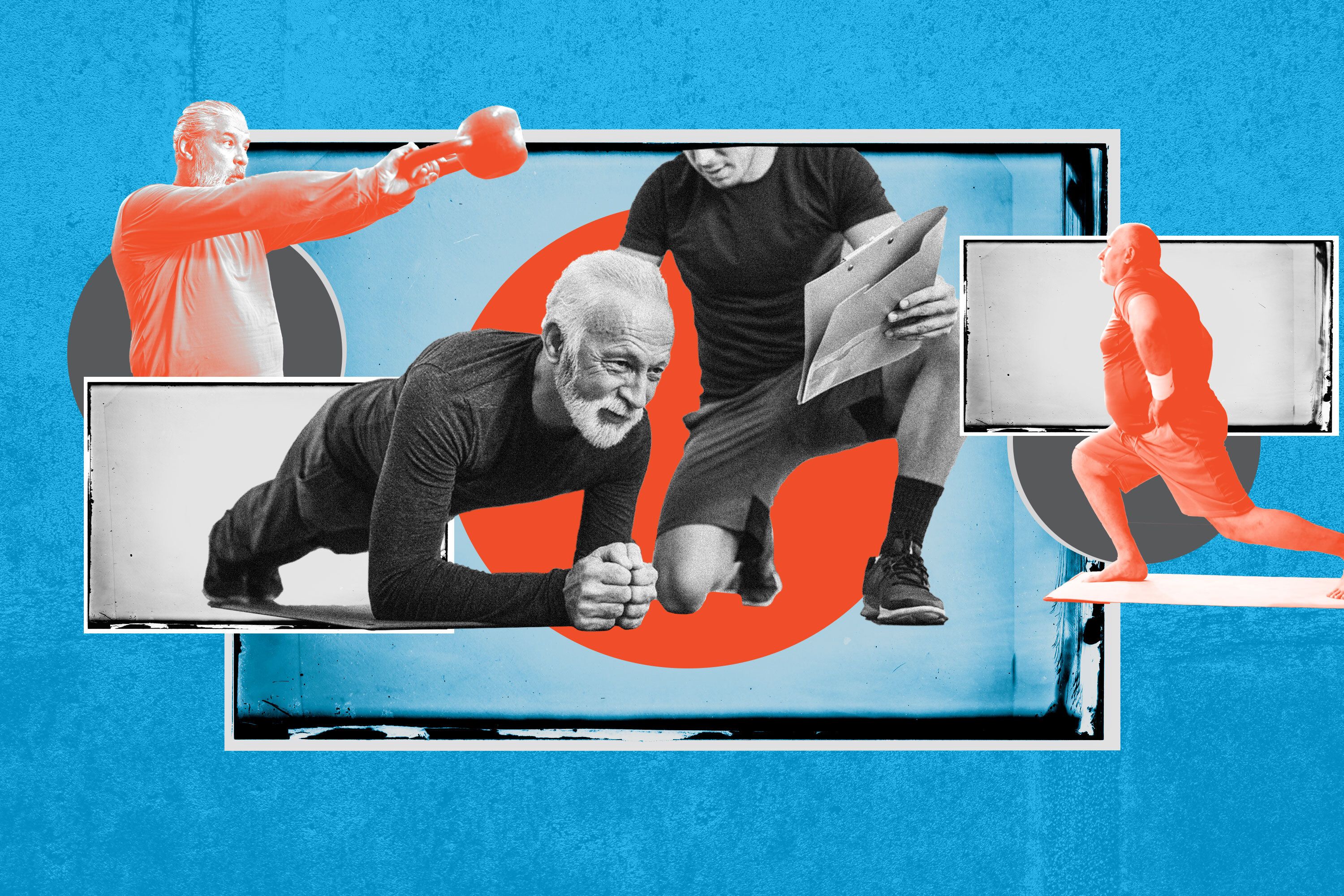
# 4 Things I Learned About Fitness from Training Seniors
The phrase "you're in this body for life" captures what working with older adults teaches trainers about long-term fitness sustainability. Training seniors reveals principles that apply across all ages, shifting how we think about exercise programming, recovery, and what actually matters in strength development.
**Consistency beats intensity for longevity**
Senior clients cannot tolerate the high-impact, high-volume training that dominates mainstream fitness culture. What they can do is show up repeatedly. Research from the American College of Sports Medicine shows that older adults gain substantial strength gains from moderate, consistent resistance training performed two to three times weekly. The difference: seniors who train consistently over months gain more functional capacity than younger people doing sporadic intense sessions. This pattern holds true across age groups. The body adapts to what you do repeatedly, not what you do once at maximum effort.
**Movement quality matters more than load**
Training seniors forces precision. A 70-year-old cannot compensate through momentum or brute force the way a 25-year-old can. Proper form becomes non-negotiable. Every rep demands control, stability, and awareness. This attention to movement pattern actually produces better results than heavy loading with poor mechanics. Trainers working with this population learn that a properly executed bodyweight squat delivers more training benefit than a loaded squat with compromised form. Young athletes benefit from applying this same standard.
**Recovery is not optional**
Seniors experience slower recovery between sessions, longer delayed-onset muscle soreness, and higher injury risk from overtraining. This reality reshapes programming. Rather than back-to-back intense sessions, effective senior training includes rest days, active recovery work, and adequate sleep cycles. The science is straightforward: muscle protein synthesis requires time and recovery resources. Training seniors teaches that recovery protocols that seem "soft" to ego-driven trainers actually drive adaptation. Everyone benefits from respecting recovery. The difference: seniors make it obvious.
**Movement addresses the root problem**
Older adults train for functional outcomes. They want to walk upstairs without pain, stand up from a chair without assistance, or pick up a grandchild. This clarity of purpose eliminates exercise vanity. There is no room for status-symbol lifts that do nothing for real life. The programming becomes brutally practical: what movements transfer to daily function. This mentality produces better long-term health outcomes than training purely for aesthetics or arbitrary strength benchmarks.
The insights from senior training translate directly to sustainable fitness at any age. Consistency outperforms intensity. Movement quality beats heavy loading. Recovery enables adaptation. Function drives purpose. These principles explain why people maintain fitness into their 70s and 80s while others quit after burning out in their 20s.
Training seniors teaches that fitness is not a phase. It is a practice that must fit into a lifetime. The body you have at 30, 40, 50, and 70 is the same body, aging continuously. Training for longevity from the start produces compounding returns. Every session becomes an investment in future capacity, not just today's performance.