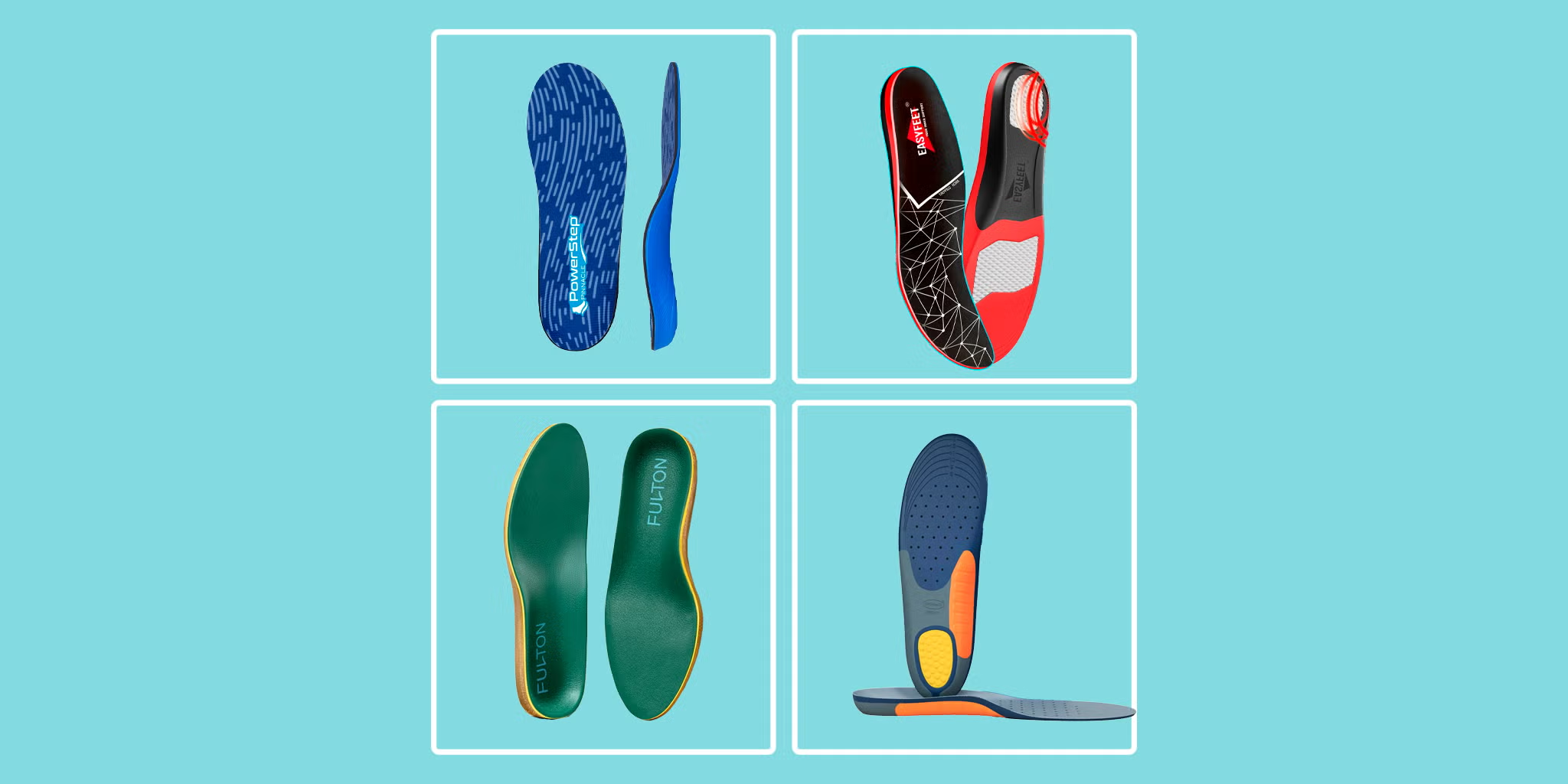
Shoe inserts can reduce stress on the foot arch and provide shock absorption, structural support, and heel stabilization, according to Kenneth Jung, M.D., an orthopedic foot and ankle surgeon at Cedars-Sinai Kerlan-Jobe Institute in Los Angeles.
The article recommends specific insoles for different foot problems. For plantar fasciitis, Dr. Scholl's insoles offer an affordable option with a contoured heel cup and shock-absorbing cushioning. For joint pain from prolonged standing, EasyFeet insoles feature firm arches and forefoot cushioned pads. PowerStep Pinnacle insoles use a dual-layer shock absorption system and deep heel cup, according to Anne Sharkey, D.P.M., a board-certified podiatrist at North Austin Foot & Ankle Institute.
For wide feet, Dr. Scholl's wide-fit insoles can be trimmed to size and offer extra cushioning throughout. For overpronators with flat feet, Superfeet All-Purpose Support High Arch Insoles provide strong arch support and hold American Podiatric Medical Association certification.
When shopping for insoles, podiatrists recommend looking for arch support, flexible cushioning made from materials like polypropylene, carbon graphite, cork, or memory foam, and shock absorption under the arch and heel. Gregory Alvarez, D.P.M., a podiatrist at the Ankle & Foot Centers of America, notes that insoles can adjust alignment and reduce shock during walking or running.
Hillary Brenner, D.P.M., a podiatric surgeon in New York City, recommends easing into wearing insoles by starting with one hour of use the first day, two hours the second day, and three hours the third day before wearing them all the time. Your body needs to adjust to proper alignment.