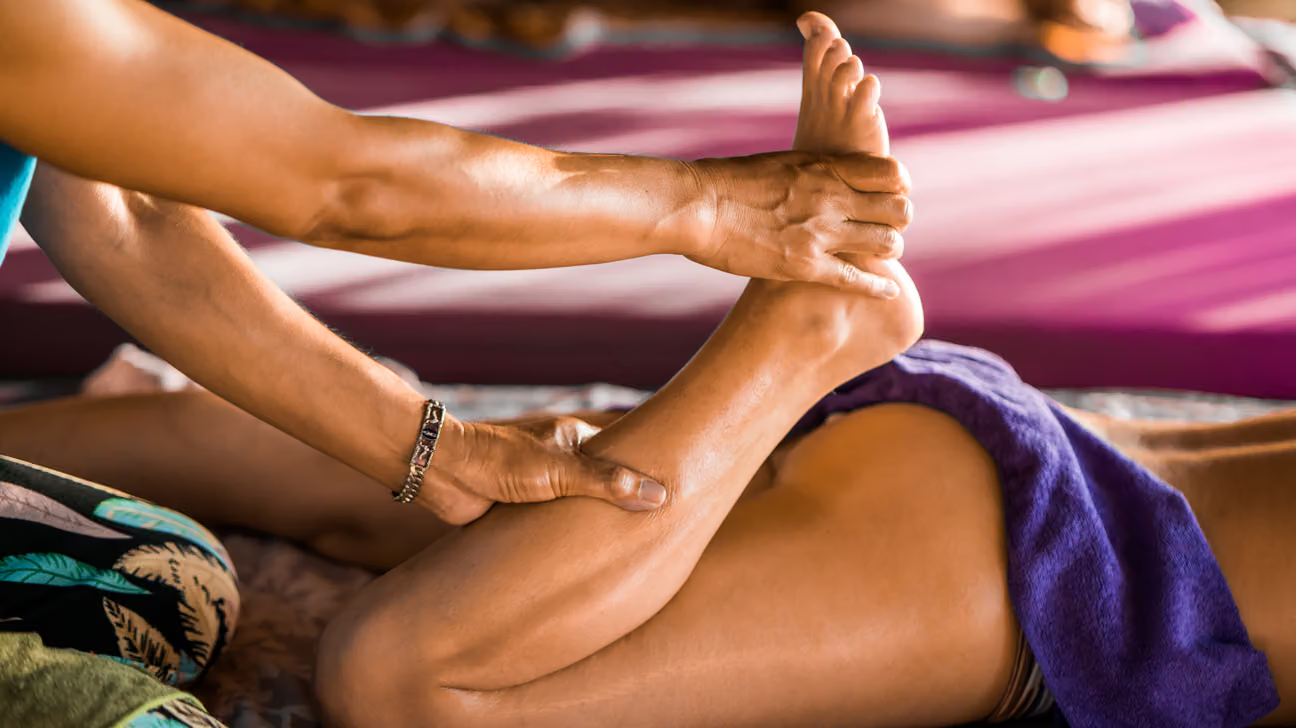
Thai massage is gaining popularity in spas, massage clinics, and yoga studios across the country, and for good reason. According to the description of this ancient technique, it combines assisted yoga stretches, acupressure, and soothing rocking for 60 to 90 minutes, drawing from Ayurvedic and traditional Chinese medicine. The experience promises real benefits: participants report feeling incredibly relaxed, more flexible, and energized. But here's the problem—the report itself acknowledges that you need to 'make sure you find someone with the proper training and certification to give you an authentic experience.' That caveat reveals a gaping hole in how we protect consumers seeking wellness services.
The distinction between Thai massage and Western-style deep tissue massage matters tremendously. Unlike a traditional massage on a raised table, Thai massage takes place on a floor mat with you fully clothed, with the therapist using their entire body weight to guide you through stretches and poses. This is an active, sometimes intense experience that can leave you sore afterward, especially during your first session. The report notes that 'some discomfort is normal as your body stretches,' but it also warns that you should communicate if 'anything feels uncomfortable.' This requires absolute confidence in your therapist's training and ethical standards.
What concerns me is that the report suggests Thai massage has 'a spiritual element based on Buddhism,' with therapists trained to send 'kind, loving, healing vibes' while working on your body. While spiritual practices have value, the blending of physical manipulation with spiritual intention creates a power dynamic that demands rigorous professional standards. We cannot rely on consumers to self-police by 'finding someone with proper training.' Industry-wide certification requirements should be standardized and enforced.
The report's advice to 'clear your mind and be open to guidance' and 'allow yourself to let go' during treatment is sound wellness guidance, but it also highlights vulnerability. When people are in a relaxed, receptive state on a floor mat with a therapist using their body weight to position them, they need ironclad protections. This isn't about skepticism toward Thai massage itself—the practice clearly offers genuine benefits. It's about demanding that practitioners undergo consistent, verifiable training before they're permitted to work with clients' bodies and energy.
If Thai massage is to maintain its credibility and grow responsibly in Western wellness culture, the industry must move beyond relying on individual consumers to verify credentials. Regulatory bodies should establish and enforce clear certification standards for all practitioners, regardless of where they work. Until then, the burden unfairly falls on clients to protect themselves—and that's simply not good enough for a practice this physically and spiritually intimate.