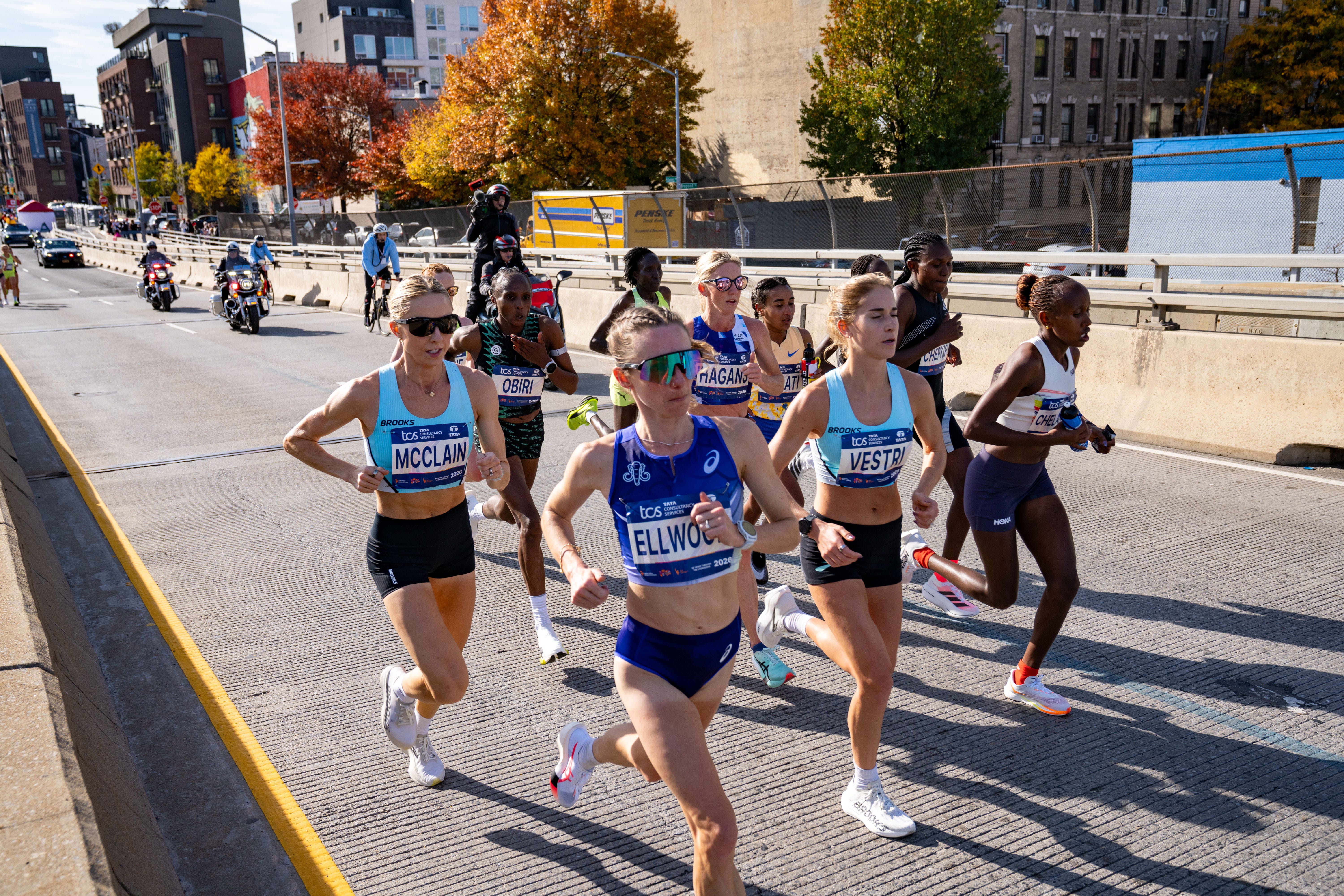
David Roche, ultramarathoner and coach to New York City Marathon runner-up Jess McClain, uses downhill training to help runners fight late-race fatigue. Roche is a two-time Life Time Leadville 100 winner and course record holder, covering the demanding 100-mile trail course in 15:12:30.
Downhill running places significant stress on the musculoskeletal system. When runners descend hills, their quads must repeatedly brake the body's momentum through eccentric contractions, meaning muscles produce force while lengthening under load. This repeated stress initially causes soreness, but triggers an adaptation called the repeated bout effect.
A 2024 review describes the repeated bout effect as a form of skeletal-muscle memory. Scientists have not identified one mechanism that fully explains the effect, but the review suggests several adaptations may work together. The nervous system may distribute load more effectively across muscles, while changes to muscle fibers, tendons, and the extracellular matrix may help tissue tolerate force. The inflammatory response may also become better regulated after encountering that stress before.
Research supports this phenomenon. A 2022 study had 10 recreational male runners complete the same 30-minute treadmill run at a 20 percent decline twice, with three weeks between sessions. Following the second run, athletes experienced a smaller rise in creatine kinase, a blood marker used to assess muscle damage, along with less soreness and a smaller reduction in maximal force.
Roche's recommended workout is straightforward. He uses an easy long run with deliberate faster pacing on descents, performed twice per week in his own training. He recommends most athletes start with one session and progress based on recovery. For experienced athletes preparing for marathons or longer races, Roche suggests a 16-mile run with descents as steep as or steeper than those in the goal race. Running these downhills faster than race pace ensures muscles can handle the challenges race day will present.