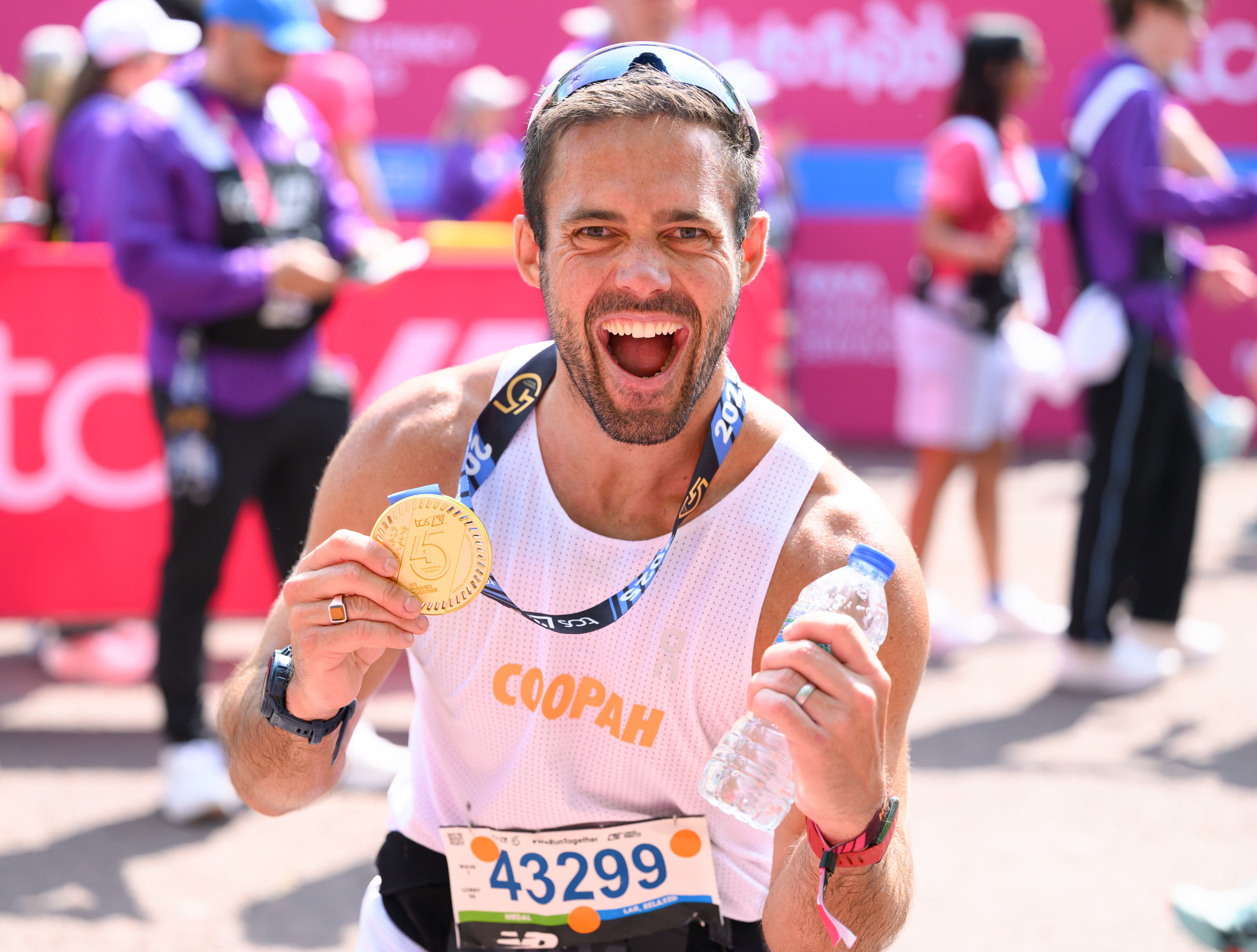
Some experts recommend taking one day of recovery time for every mile raced after a marathon, which would mean 26 days of rest for a 26.2-mile race. Others suggest one day of rest per kilometer raced, totaling 42 days of recovery. However, "rest" does not mean stopping all running. It means avoiding high-intensity training such as speedwork or racing.
At minimum, runners should take three to seven days completely off from running after a marathon. After that, active recovery begins, which includes light exercise at no more than 60 to 65 percent of max heart rate for less than 60 minutes. Recovery runs should feel easy enough to maintain a conversation throughout.
Susan Paul, an exercise physiologist and program director for the Orlando Track Shack Foundation, notes that activity promotes circulation faster than inactivity, delivering oxygen and nutrients to muscles while removing metabolic waste and supporting healing.
Delayed-onset muscle soreness (DOMS) typically follows most marathon efforts. The soreness results from microscopic muscle tissue damage, with severity depending on fitness level and race intensity. More soreness signals a longer recovery period needed. When soreness subsides, runners are ready to resume training.
Resting heart rate (RHR) and heart rate variability (HRV) provide objective recovery markers. When heart rate returns to pre-marathon baseline and HRV stabilizes, running can resume. Walking, cycling, stretching, or swimming for 30 to 60 minutes at low intensity supports recovery. Massage therapy and foam rolling also help relieve soreness.
Avoid hot baths for 48 hours after the race. Cool water baths with ice can minimize soft tissue inflammation during that window.
When ready to run, start with easy-paced short runs. One approach is reverse tapering, following your training taper plan backward. First weekday runs could be three to six miles, with the first long run around six miles, progressing to eight to ten miles the following weekend, then ten to 14 miles after that. Watch breathing and heart rate while running. If heart rate spikes or breathing becomes labored, the body still needs recovery time.