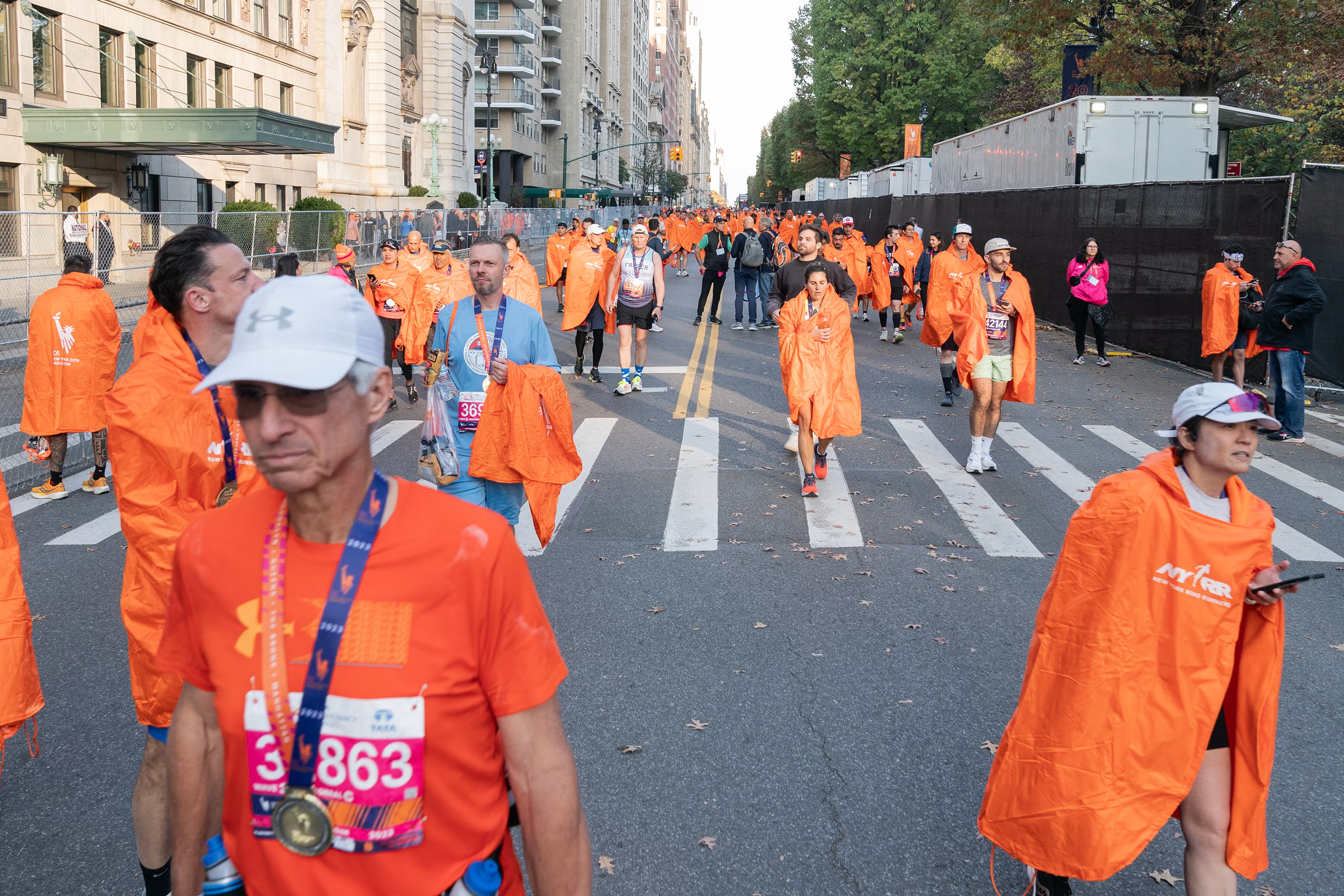
After running 14 marathons, the author offers five recovery strategies for getting back to running soon after crossing 26.2 miles.
Light activity in the days following a marathon beats complete rest. The author walked the day after her first New York City Marathon and noticed her legs felt better the next day compared with races where she stayed sedentary. Light activity like walking or easy cycling on a stationary bike reduces stiffness faster than sitting on the couch all day.
Taking time to celebrate the accomplishment matters for mental recovery. The author found that skipping this step left her feeling run down and unmotivated when returning to training.
Eating carbs and protein immediately after the race accelerates recovery. Jeff Gaudette, owner and head coach at RunnersConnect, recommends getting protein and healthy carbs before enjoying celebratory meals. A 2018 study in Nutrients found that runners who ate both carbs and protein postrace saw improvements in physical fatigue, mental energy, and soreness within three days compared with those who ate carbs alone.
Using recovery tools like compression socks, ice baths, hot tub dips, or massage can speed muscle recovery. The author sleeps in compression socks after marathons and reports less soreness the next day.
If another race is scheduled within two weeks, recovery becomes the main focus. Gaudette says the priority is getting legs to feel as good as possible through ice baths and massage. With three to six weeks between races, runners should fully recover first, then do one to two weeks of mileage and threshold work to avoid losing fitness during the five to six week total gap including the taper before the first race.
Registering for a future race soon after finishing builds motivation to return to consistent training. The author finds she feels most energized to sign up for another marathon immediately after finishing one, when momentum is highest.