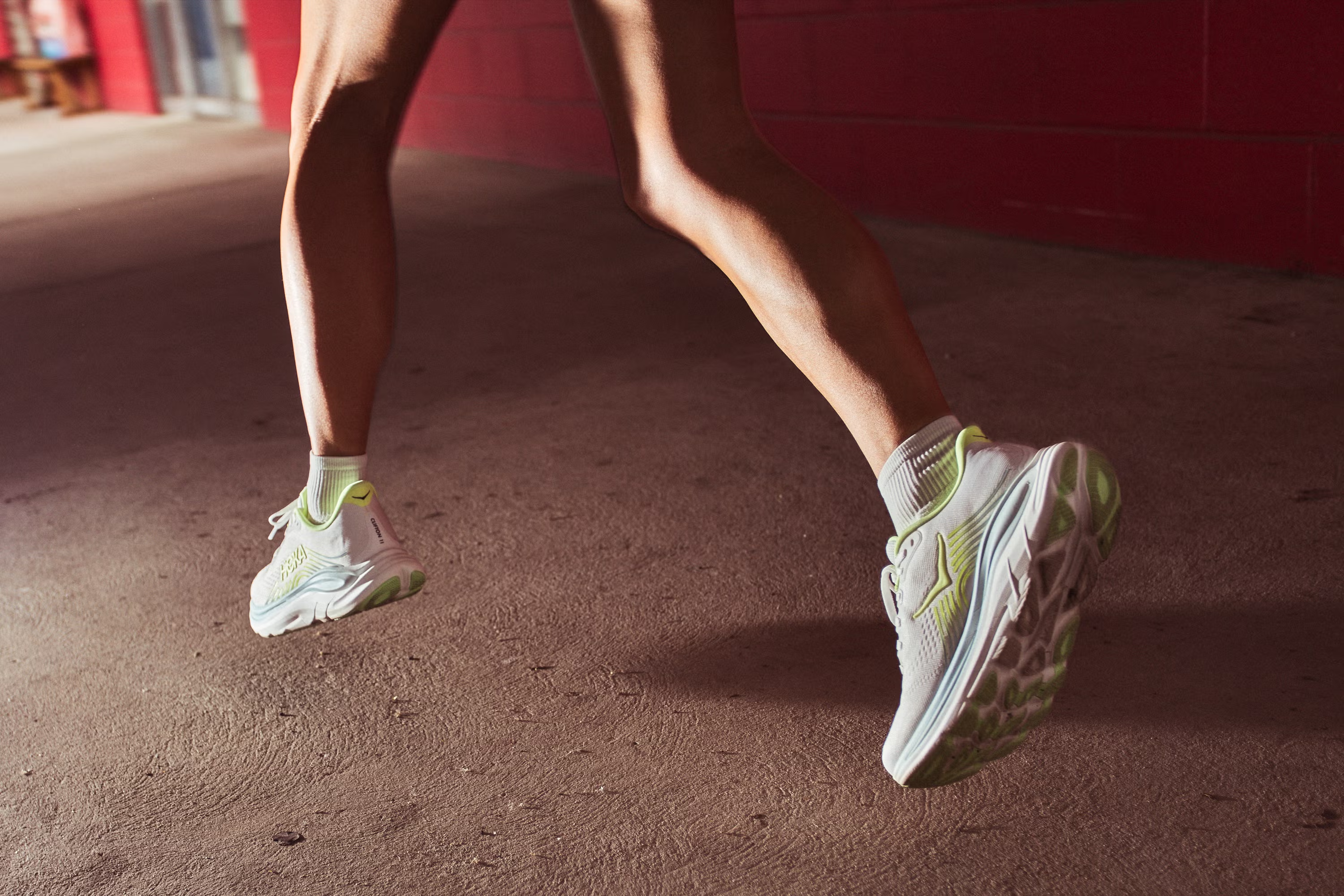
# Hoka's Shoe Lineup Goes Beyond Cushioning
Hoka has built its reputation on maximalist cushioning, but the brand's current collection reveals a deeper strategy than pure plushness. The company offers distinct shoes designed for different running scenarios, from recovery work to race-day speed.
The brand's approach centers on what Hoka calls "meta-rocker" geometry. This curved sole design propels runners forward with each stride, reducing the muscular effort required during running. This matters because it lowers injury risk while maintaining efficiency across different intensities.
Hoka's soft trainers deliver maximum cushioning for easy runs and recovery days. These shoes absorb impact effectively, making them ideal for runners logging high weekly mileage or those returning from injury. The plush feel reduces jarring forces on joints, which becomes critical for athletes training five or six days per week.
The brand also manufactures tempo and threshold trainers for sustained efforts. These shoes balance cushioning with responsiveness. They weigh less than pure recovery shoes but retain enough padding for comfort during workouts at lactate threshold, when runners sustain elevated heart rates for extended periods.
Hoka's racing shoes represent the opposite end of the spectrum. These lightweight models drop unnecessary material to boost ground feel and speed. A racer might feel firmer than a trainer but still includes the curved sole geometry that distinguishes Hoka from traditional minimalist shoes.
The company's variety addresses a fundamental training principle. Different workouts demand different tools. Recovery runs need maximum cushioning. Speed work requires responsiveness. Races demand minimal weight. No single shoe can optimize all three.
Hoka's expansion beyond cushioning also reflects consumer demand for specialized footwear. Runners increasingly understand that one pair cannot serve every purpose effectively. A shoe optimized for easy miles often feels sluggish on the track. A racing flat, conversely, provides insufficient support for long recovery runs.
The brand's product range includes options for trail running as well. These shoes add grip and protection against uneven terrain while maintaining the characteristic cushioning Hoka developed for road running.
Price points vary significantly across the lineup. Recovery trainers typically cost less than racing shoes, reflecting their simpler construction and lower-tech materials. Specialized racing models command premium prices due to advanced foams and engineering.
Runner's World evaluated Hoka's complete lineup, examining each shoe's performance characteristics and ideal use cases. The analysis shows that maximalist cushioning represents just one pillar of Hoka's strategy. The brand has successfully positioned itself as offering shoes for every training phase, not just for runners seeking maximum padding.
This diversification protects Hoka's market position. As running shoe technology evolves, relying solely on cushioning becomes vulnerable. Competitors develop equally plush alternatives. Hoka's comprehensive lineup creates switching costs for dedicated users who already own multiple Hoka shoes for different purposes.
For runners shopping for new shoes, this variety simplifies decision-making in one sense. Hoka offers documented options for each training scenario. However, finding the right shoe still requires understanding personal running mechanics and training goals. A heel striker needs different properties than a forefoot striker. A 5K runner has different demands than a marathoner.
Hoka's expansion into specialized shoes reflects a maturation of the running shoe market. Brands that succeed in the coming years will offer evidence-based variety rather than betting everything on a single innovation.