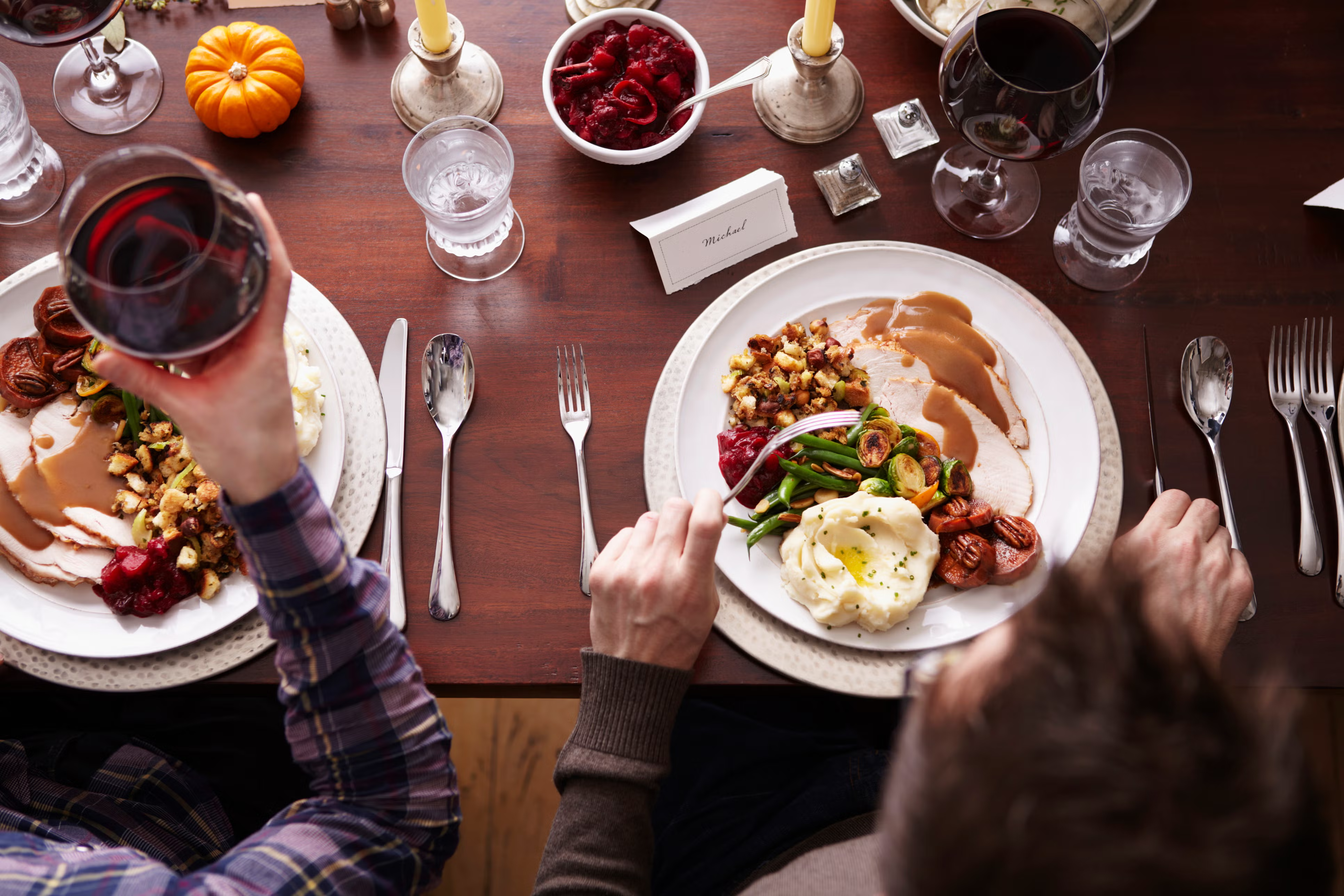
Skipping meals before a holiday dinner often backfires, according to the research and reasoning outlined by the dietitian author.
The plan assumes hunger will stay manageable until dinner arrives. Instead, long stretches without food typically intensify hunger signals. Ghrelin, a hormone linked to appetite, rises before usual mealtimes and continues to build during skipped meals, making hunger more urgent rather than simply larger.
A symposium overview published in the Journal of Nutrition reviewed controlled feeding studies and found that eating fewer than three meals a day may impair appetite control. The authors noted that many studies were small and short-term, so no single meal pattern works for everyone. The research offers no evidence that long gaps make appetite easier to manage.
Arriving ravenous changes how you eat. You're more likely to eat quickly and grab whatever is closest rather than savoring dishes you've anticipated. Fullness signals take time to register, so eating fast can carry you past comfortable fullness before you notice it.
A systematic review on winter holidays and eating behavior found that food variety, visible platters, longer meals, and eating with others are all linked to eating more. One small study in the International Journal of Obesity found that people reported feeling less satisfied by the same meal during the holiday season than before it, possibly because extra food cues around the holidays make it harder to feel fully satisfied.
Going many hours without eating can also leave people feeling shaky, tired, distracted, or irritable. Data shows eating breakfasts higher in fiber and whole grains are linked with better appetite control and mood compared to skipping breakfast. People with diabetes who take insulin or certain glucose-lowering medications should talk with their health care team about meal timing on holiday days, as skipping meals can raise the risk of low blood sugar.