Adults lose approximately 3-8% of muscle mass, strength, and bone density per decade after age 30, according to Andy Carr, trainer and head of fitness for Snap Fitness UK. Regular strength training can slow this decline.
Carr recommends focusing on compound exercises that work multiple muscle groups. Two or three strength sessions per week can build functional strength for daily tasks, he explains.
Squats work the thighs, glutes, and core simultaneously. These muscles activate when getting up from a chair, lifting objects off the floor, or crouching for gardening.
Step-ups build leg strength and balance for activities like climbing stairs, walking uphill, and stepping onto curbs. Carr notes that maintaining leg strength and stability becomes increasingly important with age.
Farmer's carries mimic carrying heavy shopping bags and work grip, shoulders, and core. Carr says grip strength can decline with age, making this exercise useful for maintaining the ability to carry items comfortably.
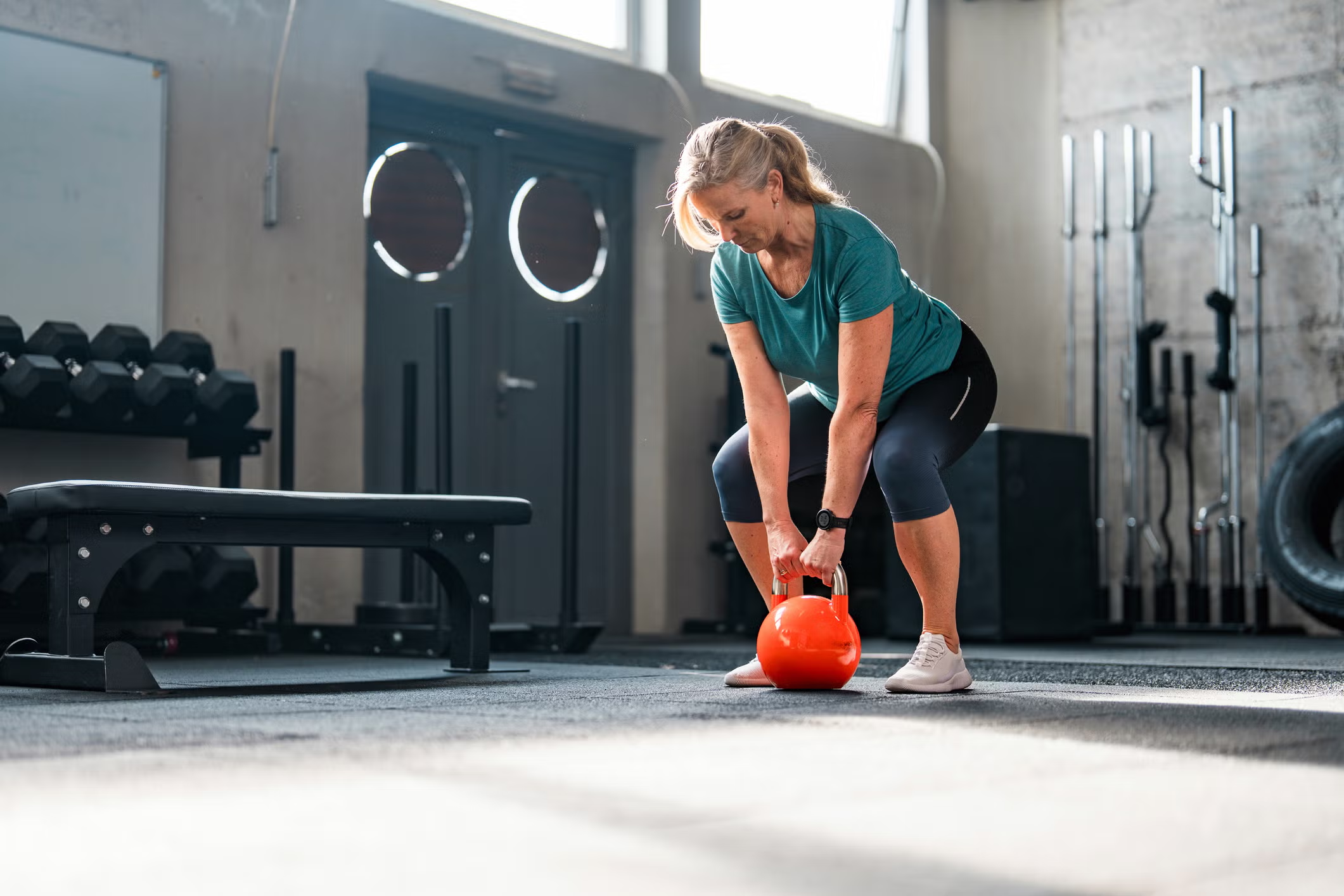
Deadlifts strengthen the glutes, hamstrings, and back, the muscles used for picking up objects like laundry baskets and suitcases. This builds confidence when handling heavier objects, Carr states.
Rows strengthen the upper back and arms for pulling movements throughout the day, from opening heavy doors to pulling garden hoses. Carr adds that rows support good posture, particularly for people who sit at desks. Using a resistance band allows you to adjust difficulty as strength improves.
Incline push-ups build upper-body strength in the chest, shoulders, arms, and core for everyday pushing movements like moving shopping carts or pushing open heavy doors. These can be adapted to your fitness level.
Woodchops strengthen the core and improve rotational control for movements like turning to place items in a car or reaching across to pick something up. Carr says this helps maintain mobility as people age.