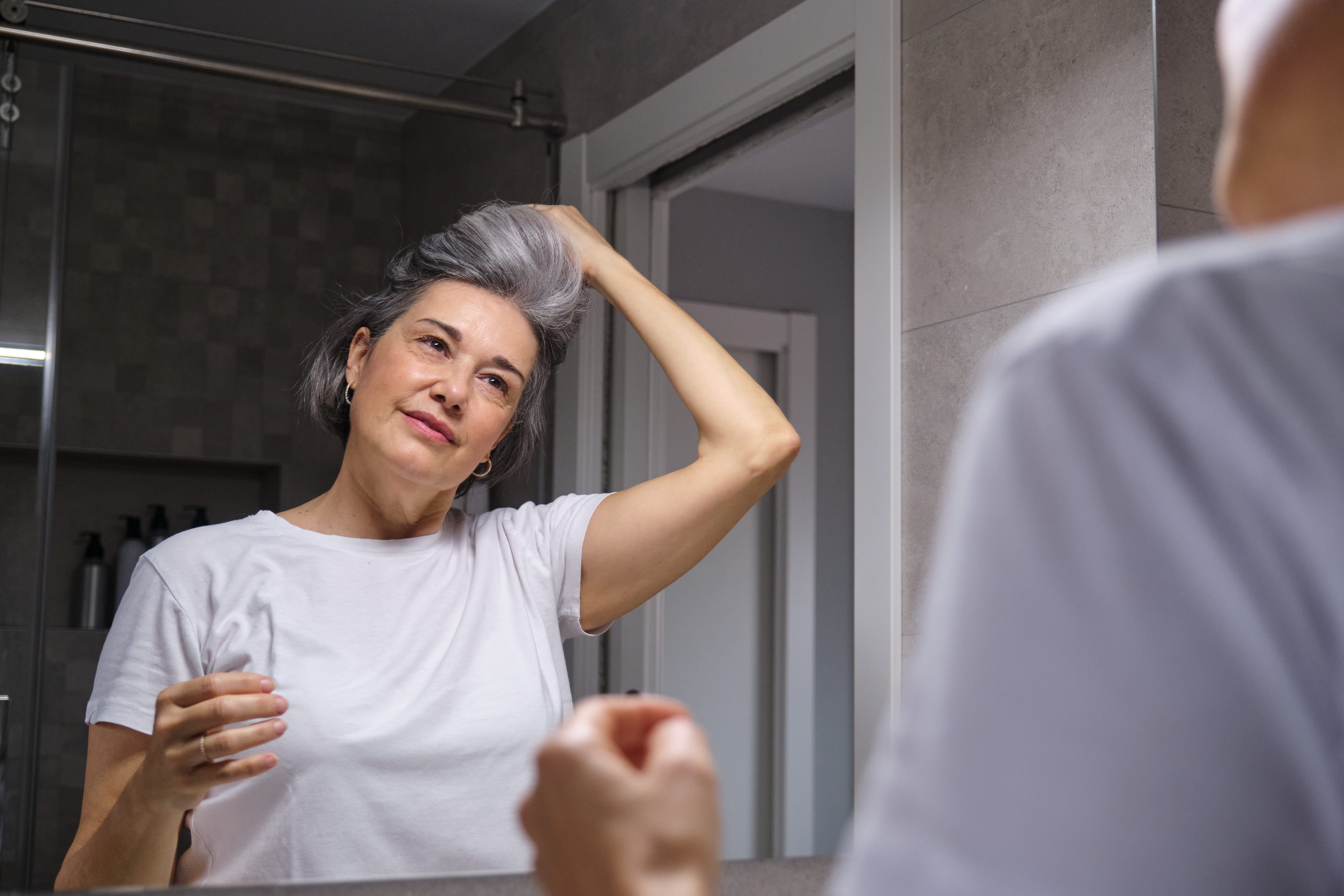
Hair texture changes as you age due to multiple factors working together at the root and along the strand. Dr. Mona Gohara, a board-certified dermatologist at Yale School of Medicine, explains that individual hair strands become finer with age, fewer actively growing hairs reduce overall fullness, and declining oil production leaves hair less shiny and soft. Damage to the strand's protective outer layer increases frizz and breakage.
Curly hair may gradually straighten, and straight hair can develop waves. This occurs because curls depend partly on the shape of the hair follicle and how evenly keratin, the hair's structural protein, distributes as a strand forms. Changes in that growth pattern loosen curls or create waves in straight hair. Dr. Gohara notes this process is partially influenced by aging and hormonal shifts, but repeated chemical damage and heat styling may also play a role.
Gray hair tends to be more coarse and dry than pigmented hair. Loss of pigment triggers structural shifts in the hair strand. "The cells that supply melanin become less active, so new hair grows in with less pigment, and some may develop a different diameter or curvature, making them feel wirier," Dr. Gohara says. Hormone changes during menopause and years of UV exposure can trigger additional dryness.
These shifts often become more noticeable in your 40s and 50s, especially around menopause, although genetics set the timeline. Dr. Gohara says hair texture changes may also indicate internal issues. Thyroid disease, pregnancy, perimenopause, certain medications, illness, and rapid weight loss can impact hair growth or shedding. Inadequate protein or iron deficiency can contribute to shedding, though links between B12, vitamin D, folate deficiencies and hair loss vary.
Years of heat styling and chemical treatments compound the problem. "Heat styling and environmental exposure can wear down the cuticle, like shingles lifting off a roof," Dr. Gohara explains. "This allows moisture to escape, leaving a rougher and more fragile surface." Bleach, permanent hair color, relaxers, repeated heat styling, and harsh shampoos all damage the cuticle.
To improve coarse texture, Dr. Gohara recommends gentler care: use a good conditioner and leave-in treatment every wash, lower heat tool temperatures, and space out chemical treatments. "Choose lightweight conditioning for fine strands and richer formulas for coarse or curly hair," she says. For thinning hair, a dermatologist can discuss topical minoxidil or prescription oral minoxidil used off-label to address hair loss. Any sudden changes warrant evaluation by your doctor.