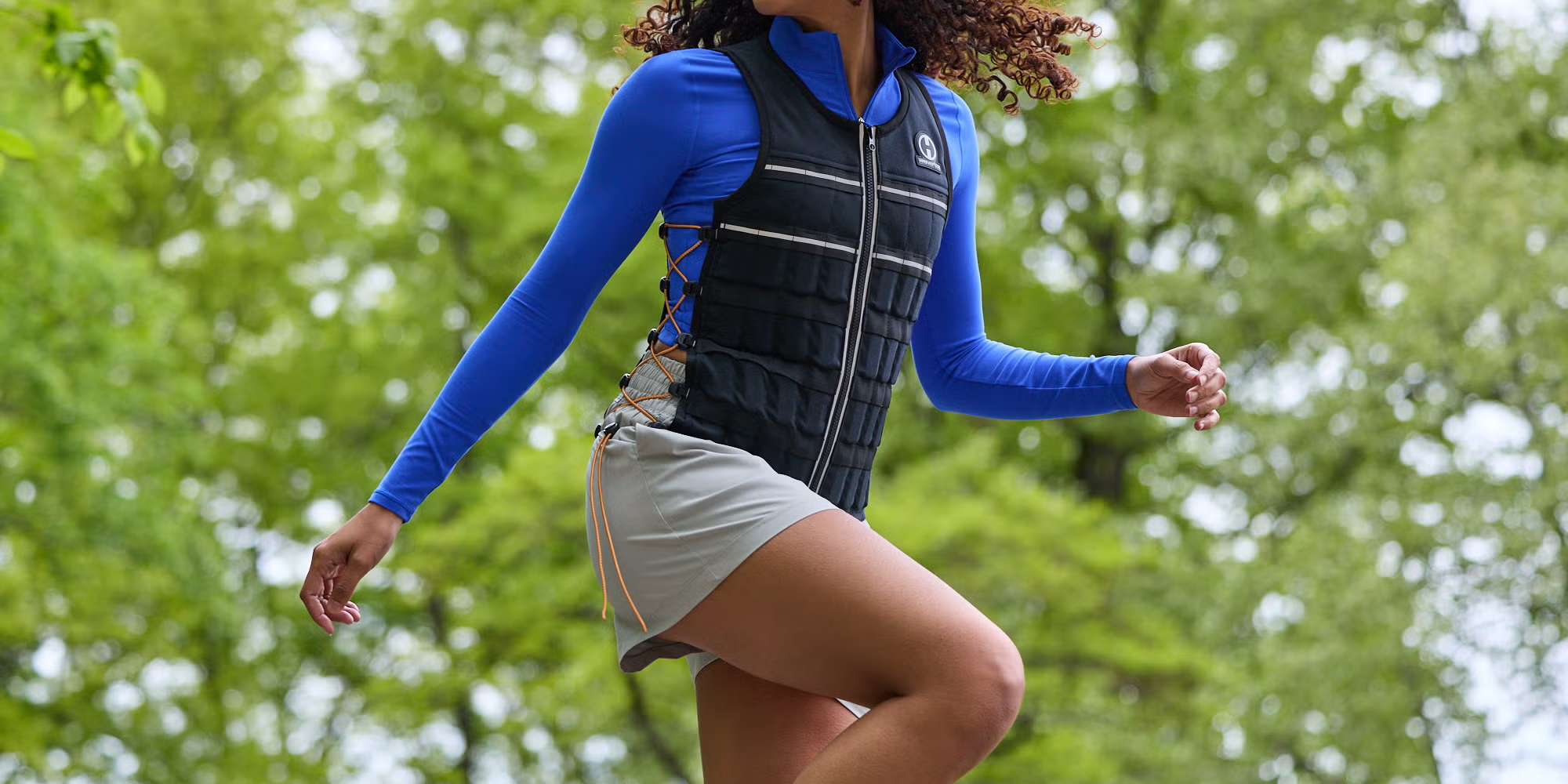
A certified personal trainer tested weighted vests for comfort, fit, and usability across different workouts.
The Omorpho G-Vest earned top marks for comfort and weight distribution. It weighs just over five pounds and uses stainless steel balls. The back panels contain 226 balls and the front contains 122. The vest measures about 17 inches from shoulder straps to bottom. It features adjustable side cords and shoulder straps for customized fit. The polyester fabric is soft but comes in only two sizes: S/M (four pounds 12 ounces) or L/XL (five pounds six ounces). The trainer noted it works well for walking, lunges, pull-ups, and push-ups, but felt challenging during heavy compound lifts like front squats and deadlifts.
The ApexUp weighted vest offers an affordable option. It uses neoprene and iron sand filling, which is denser than natural sand and absorbs less moisture. The 10-pound version has a single strap and wide armholes with an adjustable chest strap. The trainer noted the solo strap causes shifting during dynamic movements like burpees, making it better suited for walking. A mesh storage pocket holds a phone. The vest cannot accommodate added weight, though users can purchase a new one when ready for more resistance.
The Stakt Adjustable Weighted Vest starts at six pounds with a two-pound extension available. A fitness editor with NASM-CPT certification tested it during walking, chores, push-ups, and functional training. She noted the weight distributes evenly around the torso rather than loading only shoulders, which helps build proprioception and body awareness. Aluminum front buckles and hook-and-loop shoulder strap adjustments stayed secure without requiring mid-workout adjustments. A removable mesh liner zips out for washing.
The Hyperwear Hyper Vest Elite comes in 10, 15, and 20-pound models. The 10-pound version contains 66 individual 2.25-ounce stainless steel bars in separate pockets. Additional weights can be purchased. The trainer wore it during 60-minute walks, squats, pull-ups, push-ups, and back extensions. At full weight, performing pull-ups and push-ups became difficult, but removing individual weights made the load more manageable. The trainer questioned the practicality of loading and unloading individual pouches between exercises.