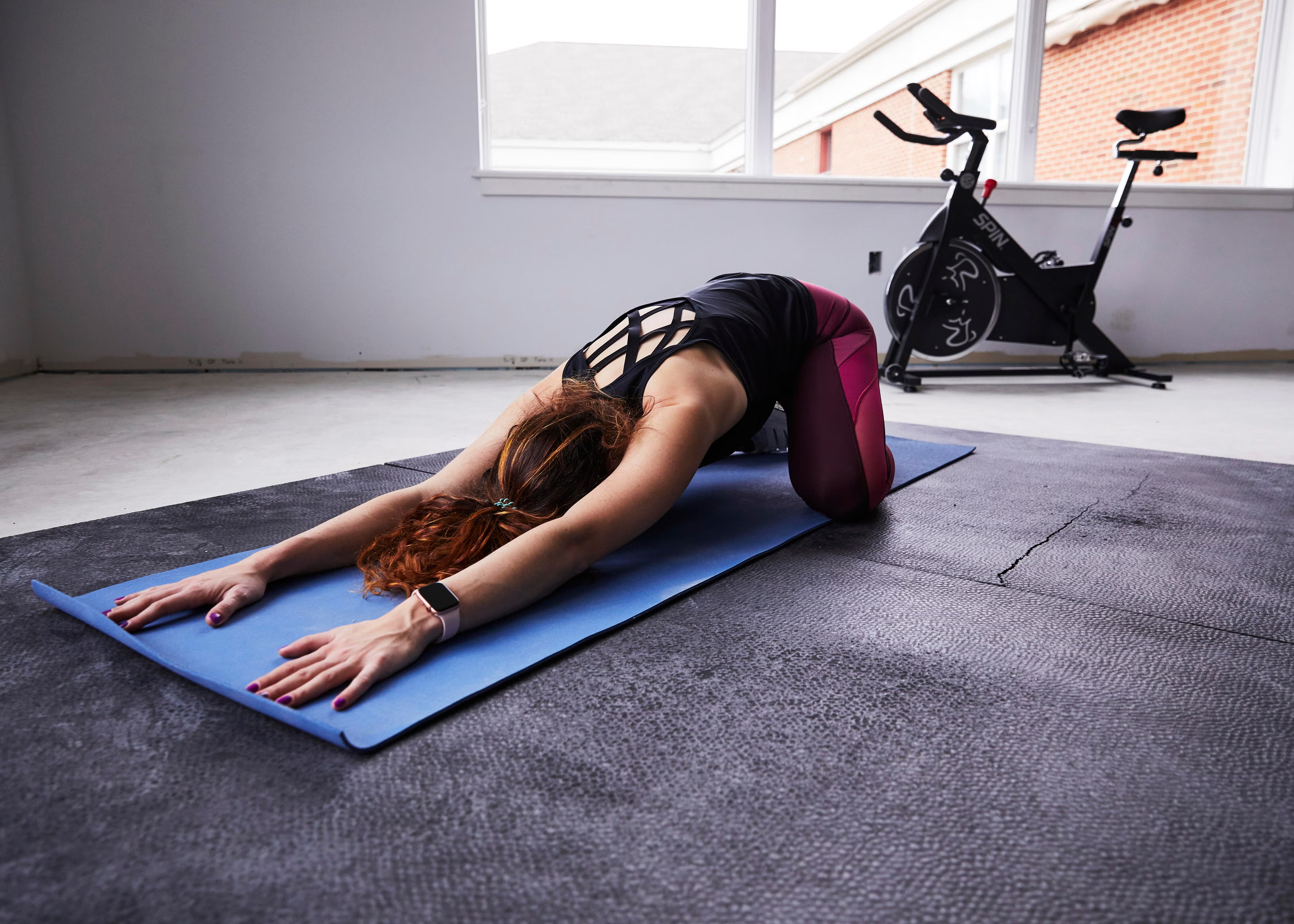
The quadratus lumborum, or QL, is a deep trunk muscle that stabilizes your pelvis and trunk while running, according to Nicole Haas, PT, DPT, founder of Boulder Physiolab in Colorado. Spencer Agnew, PT, DPT, a physical therapist at Sword Health, adds that the QL also assists with breathing during inhalation. When tight or irritated, the QL produces pain in your back or sacroiliac joints.
Several factors can irritate the QL. Tight hip flexors rank high on the list. When the psoas shortens, it pulls the pelvis into an anterior tilt, which strains the QL because both muscles insert into the same vertebrae in the lower back, Agnew explains. Weak glutes also contribute. Without sufficient glute strength, your knee can collapse inward during landing and your opposite-side hip can dip, causing your trunk to side bend and place extra strain on the QL. Running downhill worsens this effect by arching your lower back. Upper-back stiffness, shoulder issues, and mid-back restrictions can shift extra workload onto the QL as well, Haas says.
A tight QL compromises running mechanics. It reduces knee lift as you stride, which limits forward force generation and increases back arching during running, Agnew explains. This combination can produce reduced performance and increased back pain. Additionally, tightness in the QL can hinder breathing by limiting how deeply you can inhale, Agnew says.
Spencer Agnew recommends a three-step at-home series for relief. Perform myofascial release, pelvic tilts, and hip hikes daily if pain is severe, or two to three times per week for minor discomfort. On run days, do myofascial release, pelvic tilts, and hip hikes before running, then tackle other components afterward. The pelvic tilts teach you to coordinate pelvic motion for proper mechanics. Hip hikes activate the QL. Kettlebell side bends increase blood flow to aid healing. Suitcase carries build strength and stability.
A half-kneeling lunge stretch lengthens the QL and tight hip flexors. Do these daily or several times per day before or after a run. Haas cautions that if pain worsens after stretching or returns soon after, stop stretching and seek professional help.
Strength work targeting the glutes, done daily initially then two to three times weekly after six weeks, trains proper glute use in your running form and reduces strain on the QL. Resistance band exercises improve core stability and strengthen the glutes, resulting in improved running mechanics and less QL stress.
If you see no improvements after two weeks of at-home treatment, Haas recommends booking a physical therapist appointment. Agnew suggests getting evaluated sooner if pain is severe enough to inhibit your running.