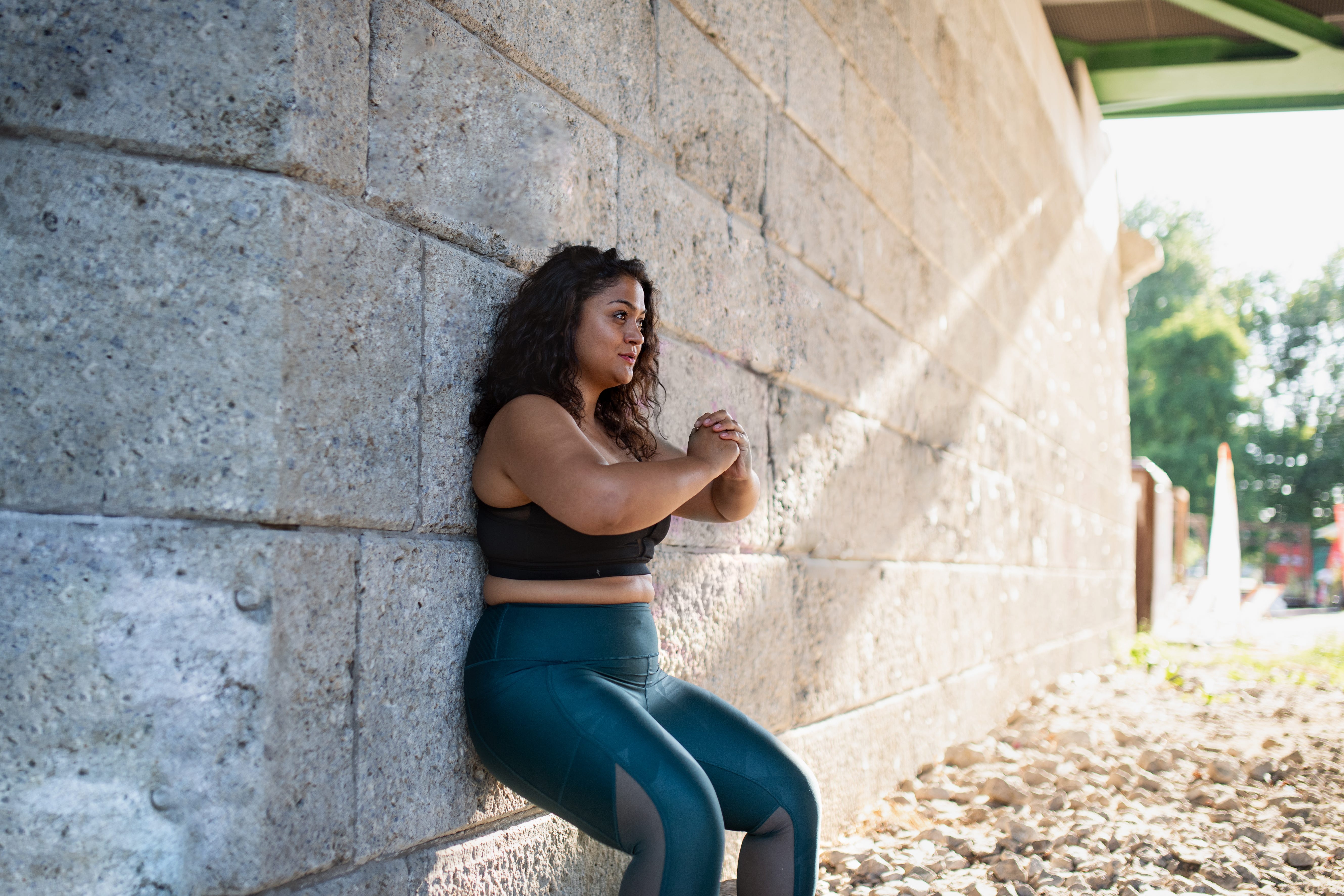
A study published in BMJ Open Sport & Exercise Medicine found that isometric exercises lowered blood pressure within four weeks. Isometric exercises are static moves like wall-sits, planks, and glute bridges that hold a muscle contraction without movement.
The study ran two four-week phases. In the first phase, all participants performed four wall-sits, held with two minutes of rest between each one, three times per week. In the second phase, groups either continued at three sessions weekly, reduced to one or two sessions weekly, or stopped exercising.
All groups that completed the first four-week phase showed blood pressure improvements. By the end of week eight, the group maintaining three sessions per week achieved an average systolic blood pressure reduction of 13 millimeters of mercury (mmHg). Groups that reduced to one or two sessions weekly saw reductions of 6.56 to 6.95 mmHg but showed signs of rising back. The group that stopped exercising returned to baseline.
Kevin Shah, M.D., a board-certified cardiologist at MemorialCare Heart & Vascular Institute, stated that "relatively simple exercises, which require little time or equipment, may help lower resting blood pressure," offering "another accessible way to support cardiovascular health" for people with limited time.
Anna Di, D.C., C.E.S., a corrective exercise specialist and chiropractor, explained that isometric exercises work by contracting muscles without joint movement, and over time exercise improves how efficiently the heart works and how blood vessels respond to blood flow changes.
The results show consistency matters most. Di noted that "when we exercise consistently, we can develop positive cardiovascular adaptations. But when we stop exercising, some of those improvements can gradually diminish." However, reducing frequency did not eliminate all benefits gained.
Di cautioned against performing only isometric exercises, recommending varied workouts including dynamic movements. She also advised breathing normally during isometric holds, as breath-holding while straining can raise blood pressure. Shah recommended checking with a doctor before starting any new exercise program, especially for those with hypertension.