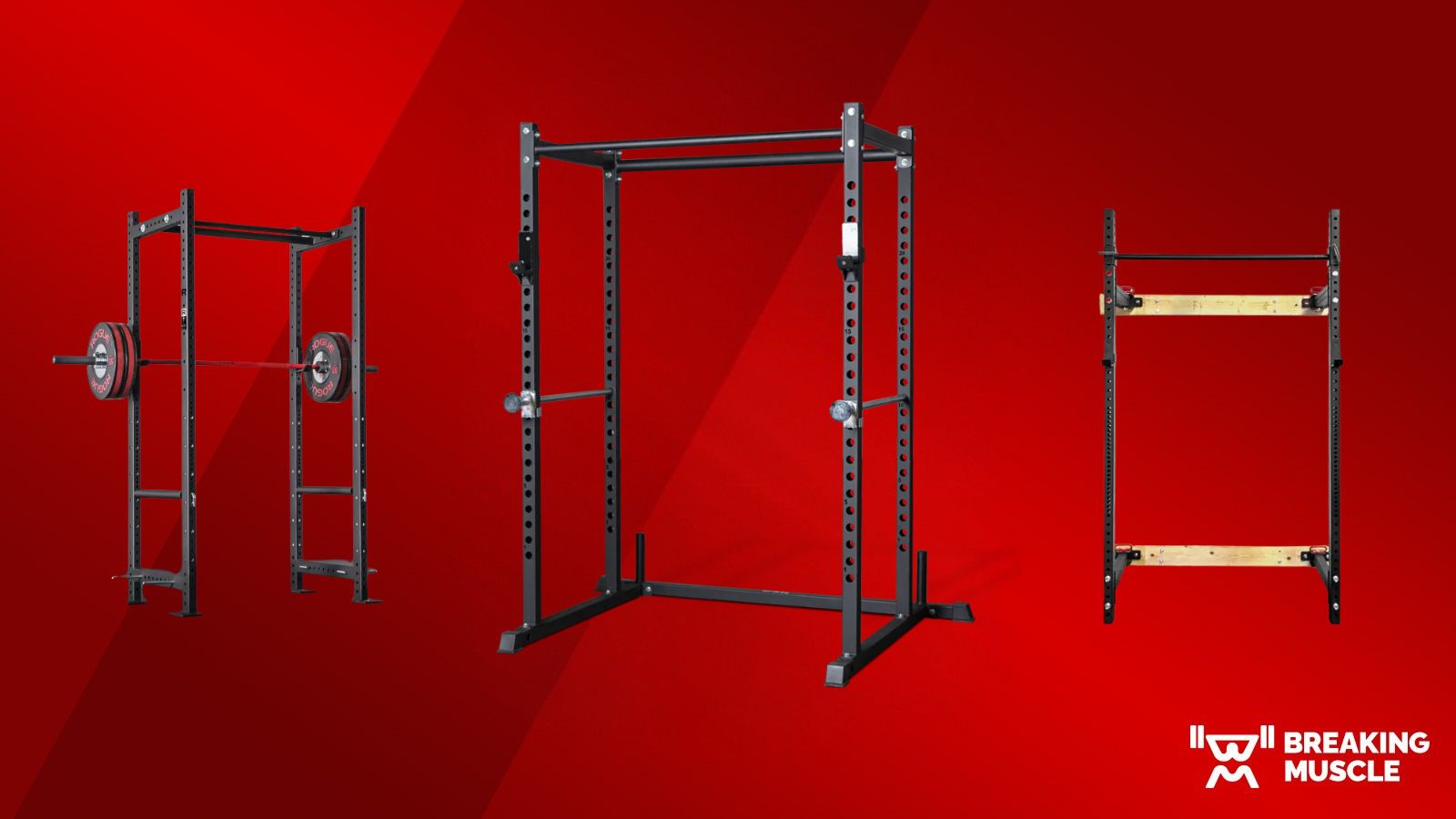
# The Best Power Racks of 2025: Top Equipment for Home Strength Training
A power rack stands as the centerpiece of any serious home gym setup. This single piece of equipment eliminates the need for a spotter when performing compound barbell movements like squats and bench presses, making it essential for lifters training alone.
The value proposition is straightforward. Power racks provide safety pins and adjustable catch arms that catch the barbell if you fail a rep. This design lets you push closer to your limits without risk. For anyone serious about progressive overload in the squat, bench press, or overhead press, a power rack transforms what's possible in a garage or spare room.
The 2025 market offers options across multiple price tiers and space constraints. Entry-level racks typically run between $300 and $600. These models handle standard barbells and weight plates efficiently but may lack advanced features or the aesthetic finish of premium options. Mid-range racks, priced from $600 to $1,500, add features like multiple attachment points, smoother pin mechanisms, and better construction quality. High-end commercial-grade racks exceed $1,500 and serve serious athletes or small training facilities.
Space remains the primary consideration for home gym buyers. Standard power racks occupy roughly 8 feet long by 4 feet wide, though half-racks and squat stands take roughly half that footprint. Buyers with compact spaces should prioritize half-racks or folding designs. Those with dedicated gym space can maximize the full power rack's versatility.
Accessory compatibility matters significantly. Top-tier racks accept standardized 5/8-inch and 11-gauge holes, making them compatible with countless aftermarket attachments. Pull-up bars, dip stations, landmine attachments, and cable systems all mount directly to quality racks. Resistance bands can hang from most racks, adding assistance work or accommodating resistance training without extra equipment.
Material quality determines longevity. Racks made from 11-gauge steel or thicker withstand repeated loading without flex or noise. Welds should be continuous and reinforced at joints. Powder-coated finishes resist rust in humid environments better than bare steel.
Weight capacity listed by manufacturers reflects safe limits under normal conditions. Most quality racks handle 500 to 1,000 pounds safely. Lifters should verify capacity exceeds their loaded barbell weight plus accessories by a comfortable margin.
Assembly demands attention. Quality racks ship with detailed instructions and require anywhere from two to four hours to assemble properly. Bolts need torquing to specification. Misalignment during setup reduces stability and creates noise during lifts.
The 2025 market shows increased demand for modular designs. Buyers prefer racks they can modify as training needs evolve. Early investment in a quality rig pays dividends over years of training. A well-chosen power rack becomes the foundation supporting progressive strength development without requiring gym membership fees or travel time.
Those building home gyms should prioritize rack quality first, then add accessories afterward. This sequencing ensures a solid foundation before expanding capability.