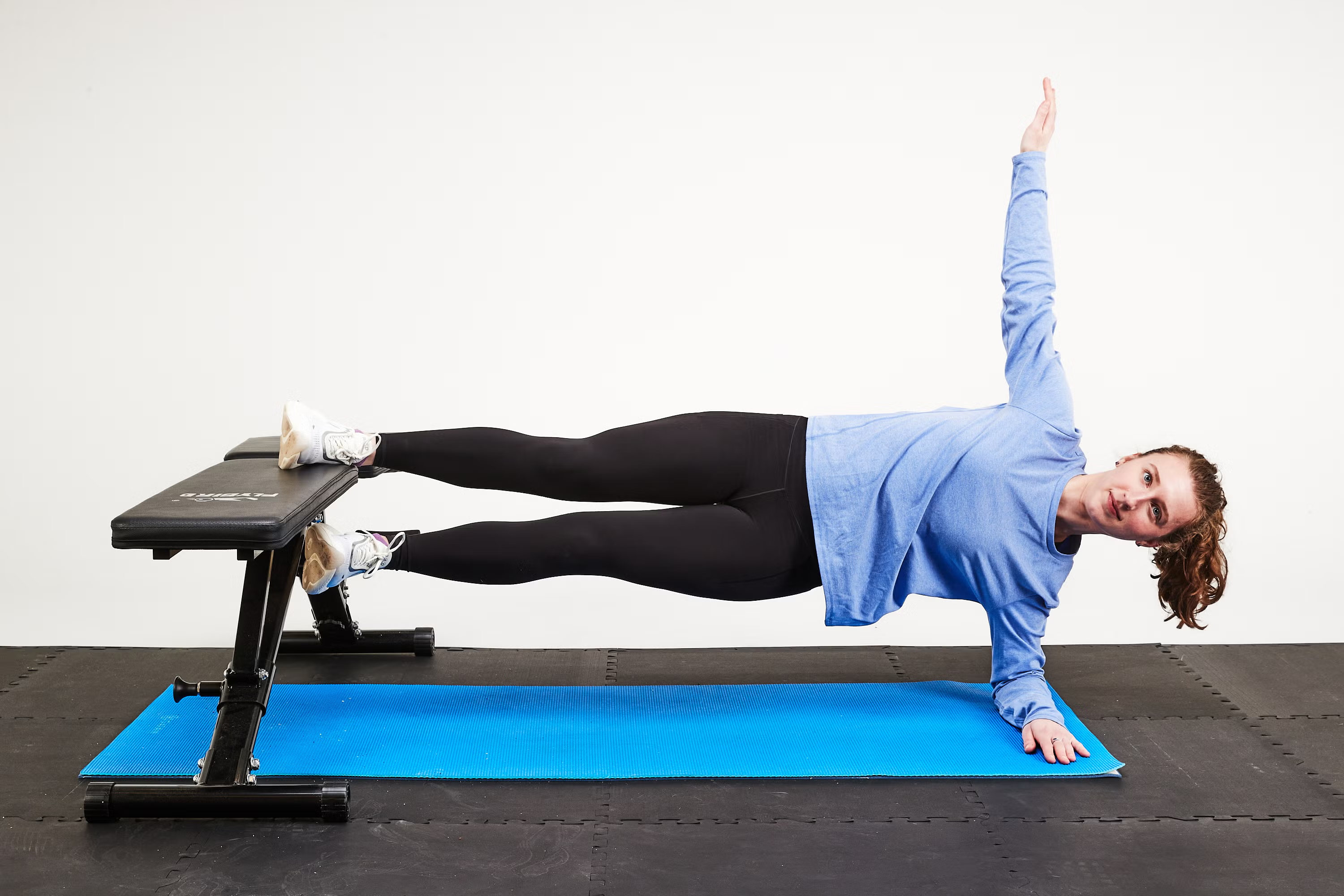
Runners should aim for at least two 10- to 15-minute core sessions per week, says Yusuf Jeffers, an NYC-based strength and run coach. This frequency supports running form, builds strength and power, and improves overall running efficiency.
The minimum can shift based on your goals and training phase. Holly Dickinson, a UESCA-certified run coach and NSCA-certified strength and conditioning coach, notes that during offseason training focused on building strength, you might increase to three or four sessions per week. During racing season, two sessions per week is typical.
Jeffers recommends prioritizing moves like planks, bird dogs, Copenhagen side planks, and glute bridges over crunches, which stress the back and neck and isolate only a few abdominal muscles. The recommended exercises work the core in all directions and mimic running form. Spend at least 30 seconds on each move, complete them back-to-back with minimal rest in a circuit format, and repeat for at least two sets.
If you already strength train regularly, you may not need additional core work. Jeffers notes that exercises like weighted back squats, deadlifts, and bench presses require core bracing and spinal stability, which counts as built-in core training.
Jeffers defines the core as everything except your arms and legs, including abdominal muscles, glutes, pelvic floor, and back. A stronger core improves power transfer while running and enhances running economy. During long runs, weak core strength can lead to postural breakdown, making running feel harder.
Focus on proper form during core movements. Avoid arching your back or sagging hips in a plank, or feeling lower back burn instead of glute activation during glute bridges. Slow down rather than using momentum or high speed if form breaks down.
Core work requires no equipment, making it easy to add to warmups, strength sessions, or after interval workouts. Dickinson emphasizes that consistent, simple sessions work better long term than seeking quick fixes.