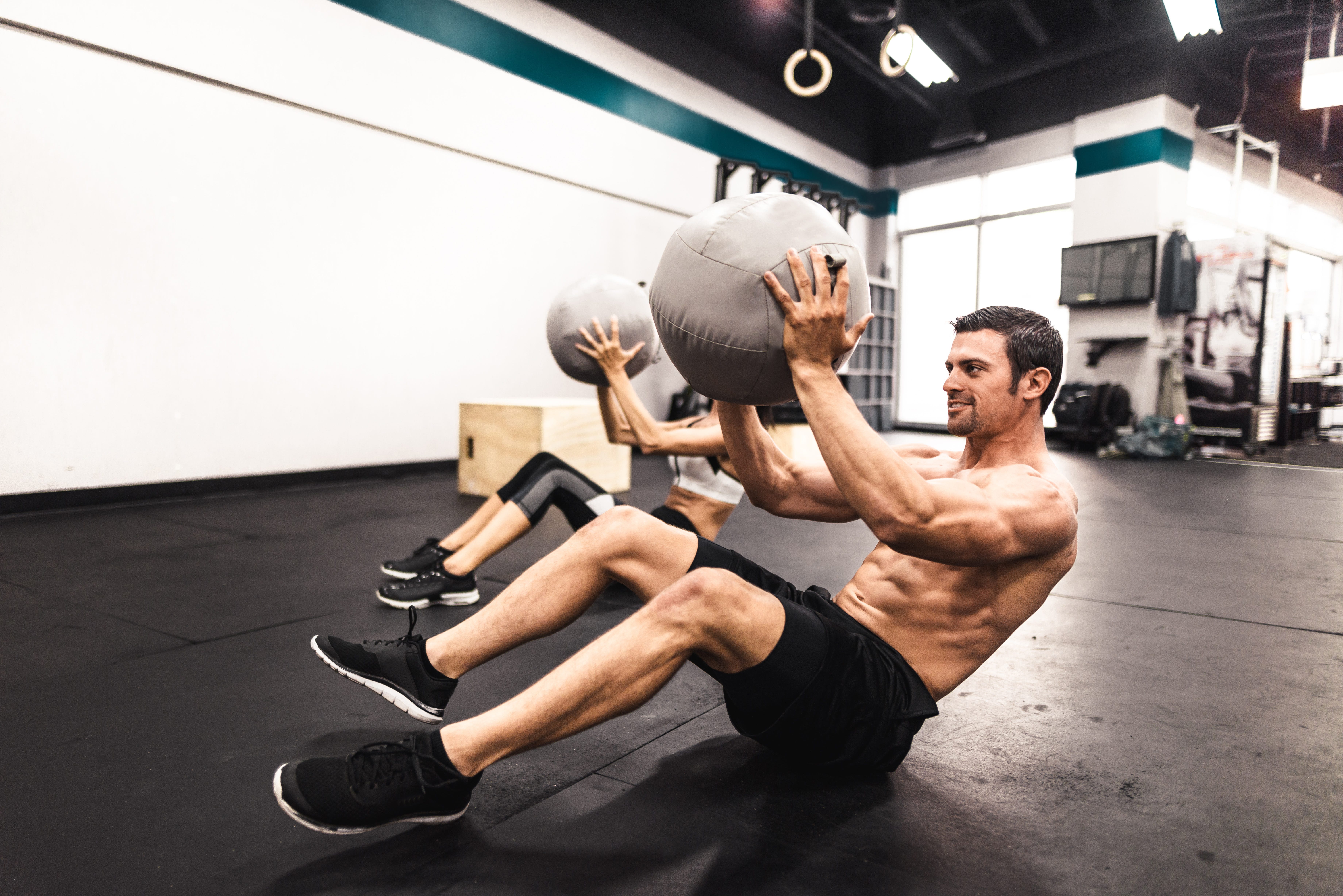
Weighted resistance training for the abdominal muscles produces stronger results than bodyweight exercises alone, according to guidance from Don Saladino, an MH Advisory Board member, and Ebenezer Samuel, C.S.C.S., the Men's Health fitness director.
The core responds to the same training principles as other muscle groups. Progressive overload, the gradual increase of training demand, applies to ab training just as it does to chest, arm, and leg training. Adding load to core exercises triggers hypertrophy, the process of building muscle.
The recommended weighted exercises include hollow holds for bracing (3 sets of 40-second holds with 20 seconds rest), dumbbell side planks targeting lats and anti-rotational strength (3 sets of 10 to 12 reps per arm), sled or cable-based plank variations, Paloff presses for anti-rotation function, loaded carries starting at 20 seconds and increasing over time, weighted situps (3 to 4 rounds of 30 seconds on, 30 seconds off), dead bugs (3 sets of 8 reps per side), Russian twists with load (3 to 4 sets of 30 seconds on, 30 seconds off), cable crunches starting at 3 sets and building to 5-second holds, and 3-step getups (3 sets of 8 to 10 reps per side).
A stronger core improves performance in other exercises. Ebenezer Samuel states, "Your abs need to be strong so you can squat better, deadlift better—you can hit all your exercises better."
The abdominal region includes the obliques, transverse abdominis, rectus abdominis, and spinal erectors. Performing heavy compound movements like deadlifts and squats without a weight belt also recruits core muscles as a unit to stabilize the spine.