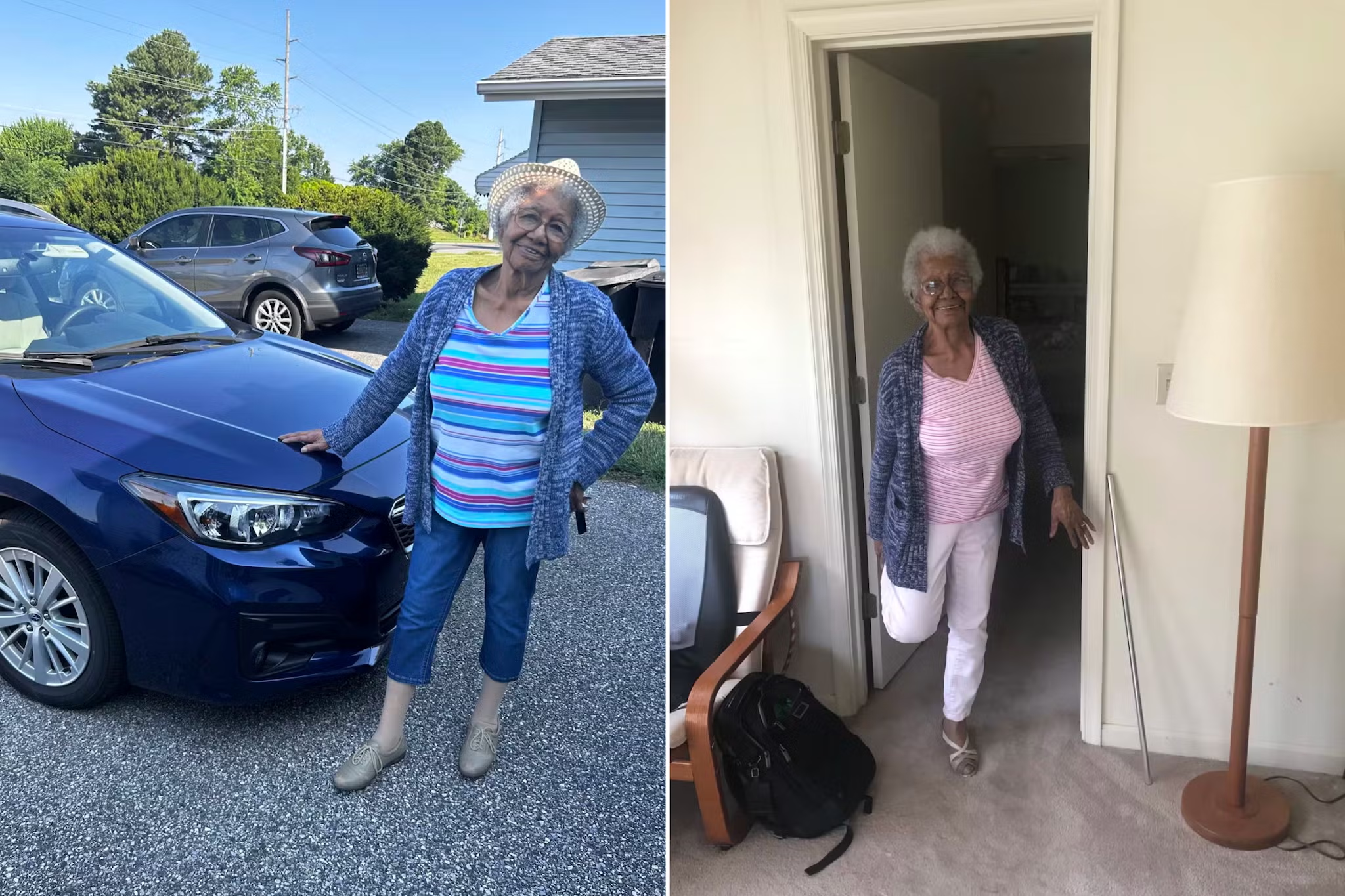
Susan Young Browne, a 108-year-old from Delaware who lives independently, starts each morning with a 10-minute routine of stretching, strengthening, and balancing movements. She also attends chair dancing classes at a local community center and walks unassisted.
A key focus of her daily exercise is leg strength. "I get up and stand against the wall and exercise my legs. I make sure my legs are exercised," Browne told TODAY.
Research supports this approach. One study found that older adults with greater leg strength had 34% lower odds of low cognitive function than those with weaker legs. A 10-year study of more than 300 twin sisters reported "a striking protective relationship" between leg power and cognition, with the twin who had greater leg power at the start maintaining cognitive function better and showing fewer age-related brain changes over the decade.
Browne performs two simple wall exercises. The first is a single-leg balance against the wall, which supports strength and balance. The second is a wall sit, an isometric exercise where muscles don't change length during the movement. According to personal trainer Aimee Victoria Long, wall sits are safe, put little stress on the spine, and mainly target the quadriceps while also improving endurance, balance, core, and lower-back strength.
Bodyweight squats offer another no-equipment option for lower-body strength. One study found that doing 60 seconds of squatting exercises during long periods of sitting may help preserve cognitive function.