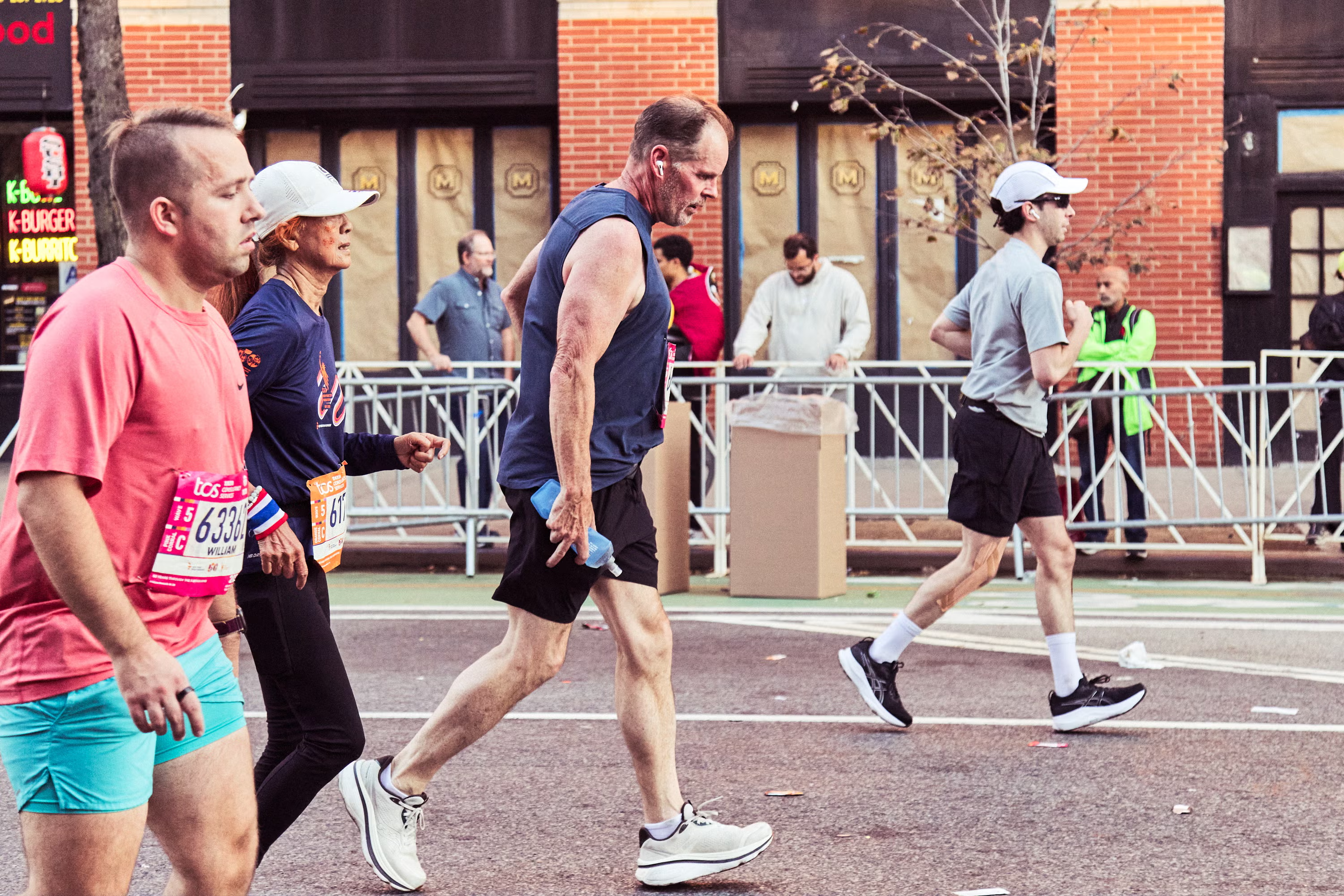
A 60-year-old first-time marathoner completed the New York City Marathon in 5:18:56 after less than a year of running training, using five core strategies.
The runner, an editor at Popular Mechanics, had no running background before May when he completed a local 5K in 35:16. He then accepted an opportunity to run the NYC Marathon despite doubts about his fitness level. Colleagues pushed him to say yes and believed he could finish.
For training, he followed the Runner's World six-month zero-to-marathon training plan loosely, starting in early August. He ran three times per week on local trails, averaging three to five miles at easy effort, and added hills to build leg strength. He completed a 15-mile long run, the minimum distance coaches recommend for marathon training, which gave him confidence for race day. He also performed four threshold interval workouts early in training, including eight sets of one-minute efforts with one-minute recovery.
Strength work happened three to four times weekly using a 35-pound kettlebell. His routine combined 20 to 50 kettlebell swings, 10 weighted goblet squats, and 10 push-ups done continuously without stopping. He added two to three sets of five to 10 minutes of jump rope at least once weekly for plyometric power and durability.
A health concern briefly disrupted training. After realizing he has an enlarged aorta, diagnosed years earlier from his work as an ironworker, he contacted his cardiologist. The doctor cleared him to continue running with caution after a conversation with his nurse practitioner, though he missed many scheduled long runs due to stress and rescheduled imaging appointments.
Race day nutrition included three pancakes before leaving his house and 12 gels plus electrolyte mix during the race. He maintained an easy effort throughout, breathing through his nose most of the time. He adjusted his goal from sub-five hours at mile 20, focusing instead on finishing. Seeing a pregnant runner at mile 18 or 19 inspired him to keep going. His family appeared at mile 17, providing emotional support through the final miles.