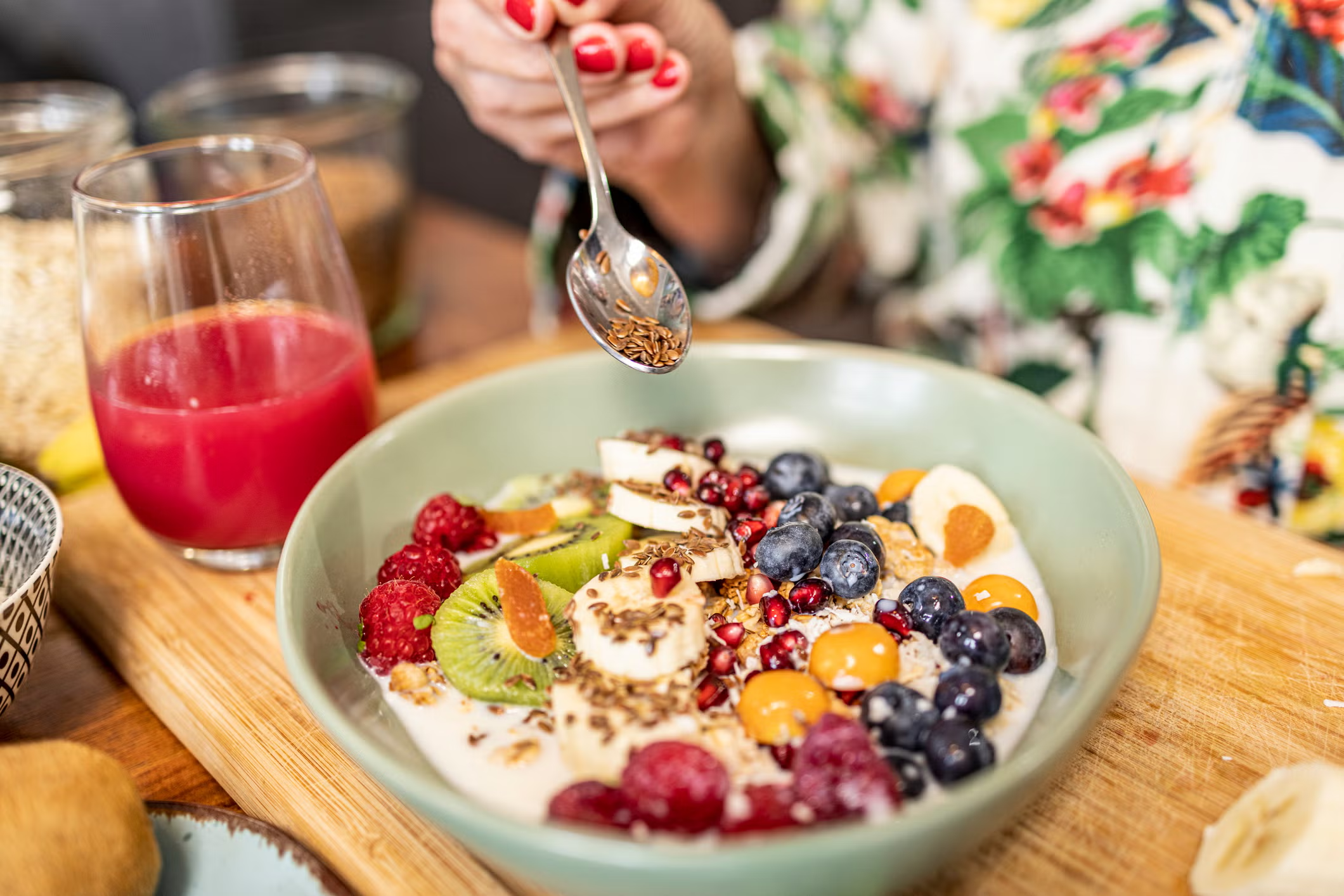
A registered dietitian explains how pairing protein with fiber creates complementary effects that improve meal satisfaction and blood sugar control.
Protein triggers fullness hormones and digests slowly. Fiber, particularly soluble fiber found in oats, beans, apples, and chia seeds, absorbs water and slows stomach emptying. Together, they keep you satisfied longer than either nutrient alone and reduce the likelihood of snacking an hour after eating.
The combination also steadies blood sugar. Fiber slows sugar absorption into the bloodstream. Protein blunts post-meal blood sugar spikes. Some research suggests eating protein and vegetables before the carb portion of a meal may lower glucose response further.
Fiber feeds beneficial bacteria in the colon. When these bacteria break down certain fiber types, they produce short-chain fatty acids that nourish gut cells and support immune function. Research links higher fiber intake with lower risk of heart disease, type 2 diabetes, and colorectal cancer, though these are associations rather than proof of cause and effect.
Health organizations recommend about 25 grams of fiber daily for women and 31 to 34 grams for men. Fewer than one in 10 adults meet this target.
Research suggests spreading protein across meals rather than loading it at dinner better supports muscle maintenance, especially for adults over 50.
To apply this strategy, add protein to existing meals. Pair oatmeal with Greek yogurt or eggs. Swap regular bread for whole-grain bread and add vegetables or fruit to sandwiches. Beans, lentils, chickpeas, edamame, nuts, and seeds contain meaningful amounts of both nutrients.
If you currently eat little fiber, increase intake gradually over two to three weeks while drinking plenty of water to avoid gas or bloating. Convenient options include canned beans, frozen edamame, single-serve Greek yogurt, precooked lentils, and whole-grain bread.
People with kidney disease, digestive disorders like IBS, or those taking diabetes medication should consult a healthcare provider before significantly changing protein or fiber intake.