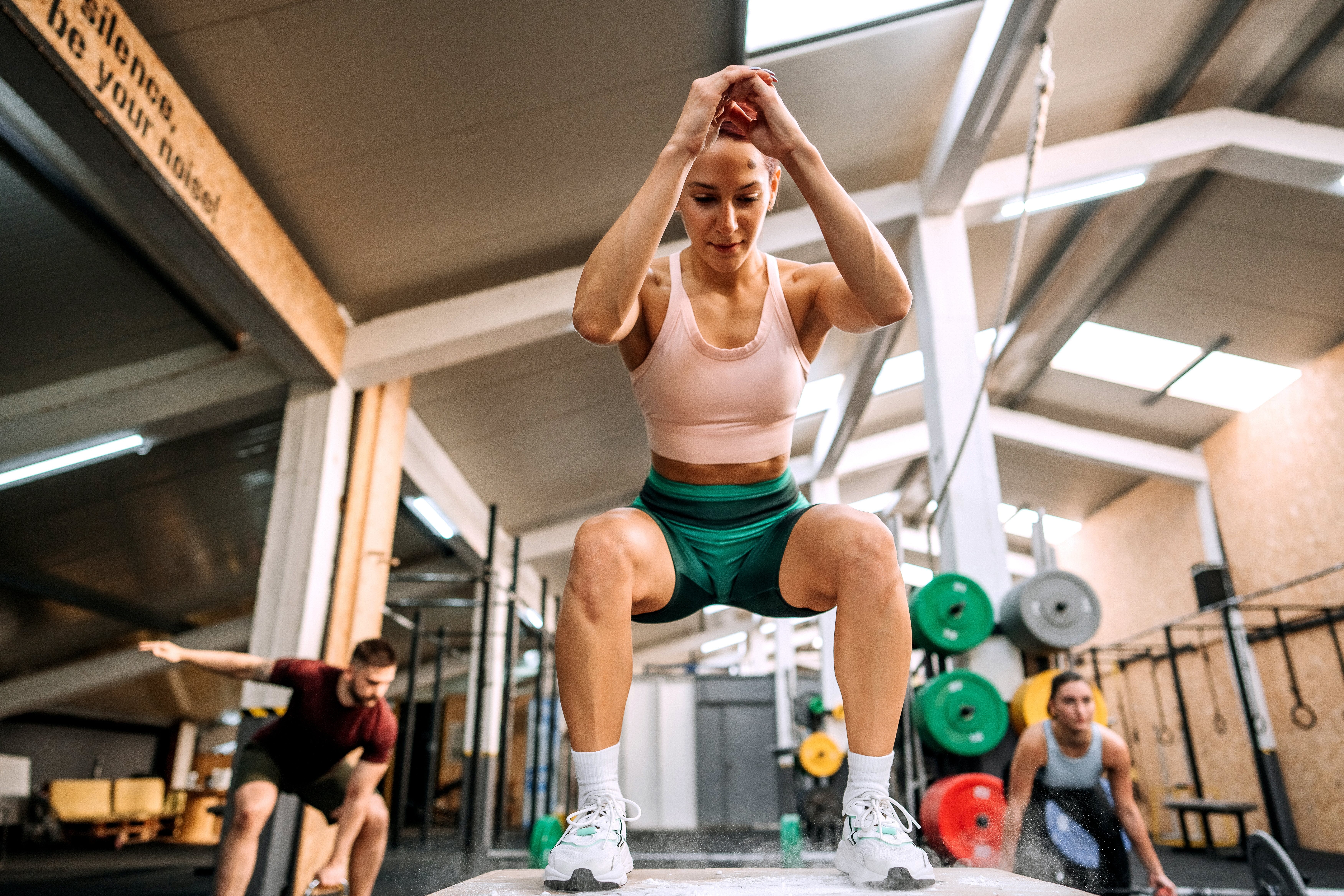
Tina Tang, a powerlifter at 52, discovered she had osteopenia despite heavy lifting, adequate protein intake, and good form. The missing piece in her routine was plyometrics. She added jumping exercises and received a follow-up DEXA scan two years later showing measurable bone density improvements, particularly in her right hip.
Many women over 40 avoid plyometrics due to misconceptions about joint pain, pelvic floor issues, and bone fragility. Board-certified orthopedic surgeon Pamela Mehta, MD, says these concerns lack scientific backing. For most healthy women, plyometrics are among the most effective tools for protecting bone health.
A review in Current Osteoporosis Reports found plyometrics are effective for improving bone density and reducing fracture risk in post-menopausal women. A 2025 review in BMC Musculoskeletal Disorders showed that already-active people who added plyometrics saw improvements in bone mineral density at the spine and hip.
Plyometrics produce force rapidly, creating high-impact loading that bones need to remodel and grow stronger. A 2023 review in the Journal of Sports Sciences found high-impact jumping exercise improved bone mineral density more than non-jumping alternatives. When landing, sensor cells in bones detect the impact burst and signal builder cells to lay down new bone, says Dr. Parini A. Patel, an interventional pain and musculoskeletal medicine physician at Atlantic Health in New Jersey.
Strength and conditioning specialist Alena Luciani, MS, CSCS, explains that plyometrics differ from traditional weight-bearing exercises. A jump squat requires faster force production than a goblet squat.
Plyometrics also strengthen systems that prevent fractures. They train the central nervous system and increase reaction time, which can help prevent falls and hip fractures. Fast reaction time matters because hip fractures increase the risk of future fractures and are associated with higher mortality rates, especially in older women.
Women face significantly higher lifetime risks of osteopenia and osteoporosis. Eighty percent of all people with osteoporosis are women, studies suggest. Estrogen protects bones by supporting new bone formation. When estrogen levels drop during perimenopause and menopause, women lose bone mass rapidly. Women also reach lower peak bone mass in early adulthood than men and have smaller bones. Women live five to six years longer than men on average, spending more years in a lowest estrogen state, which weakens bone internal structure over time.
The spine is the most common osteoporotic fracture site among women, with the hip a close second. Both regions are highly responsive to plyometric training because they absorb the most force during landing, says Dr. Patel. Health care providers emphasize that plyometrics complement traditional strength training rather than replace it.