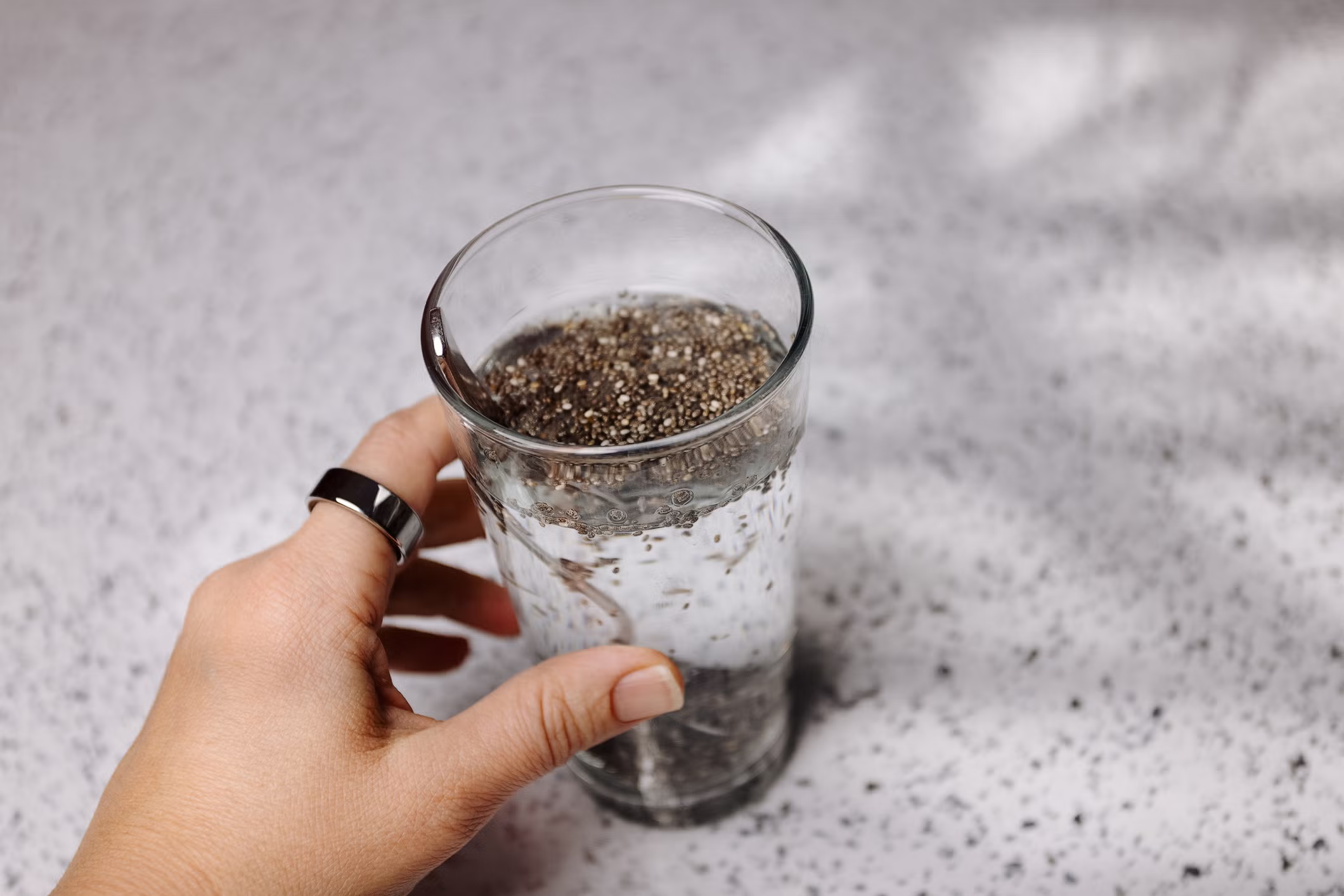
Chia seed water, made by mixing chia seeds with water and letting them gel for about five minutes, has gained popularity on social media as an easy way to boost daily fiber intake. One ounce of chia seeds (2.5 tablespoons) provides 138 calories, 8.7 grams of fat, nearly 10 grams of fiber, plant-based omega-3 fatty acids, calcium equivalent to a small glass of milk, and potassium comparable to a small banana, according to registered dietitian Sonya Angelone, Ph.D., R.D.N.
Jessica Cording, R.D., C.D.N., author of The Little Book of Game-Changers, recommends chia seed water to patients and clients, particularly when traveling. The fiber content helps address the fact that most Americans don't meet the recommended 25+ grams of daily fiber. Chia seeds absorb many times their own weight in water, acting as a bowel regulator that may help with both constipation and loose stool, says Lindsay Malone, R.D.N., M.S., instructor in the department of nutrition at Case Western Reserve University School of Medicine. The fiber can also slow digestion and reduce blood sugar spikes, which helps stabilize energy and reduce cravings.
However, dietitians note drawbacks. Keri Gans, R.D., author of The Small Change Diet, warns that chia seeds contain phytic acid, a compound that can bind to minerals such as iron, zinc, and calcium, potentially reducing absorption. Bloating and gas risk increases if you consume too much chia seed water, especially if your fiber intake has been low. Malone emphasizes drinking adequate regular water alongside chia seed water to prevent constipation caused by the seeds absorbing liquid. The seeds must soak for about five minutes before drinking, as dry chia seeds pose a choking hazard.
To make chia seed water, add one to 2.5 tablespoons of chia seeds to eight ounces of water. If you're not accustomed to high fiber, start at the low end. Cording suggests testing chia seed water when a bathroom is nearby, cautioning against trying it on long car trips.