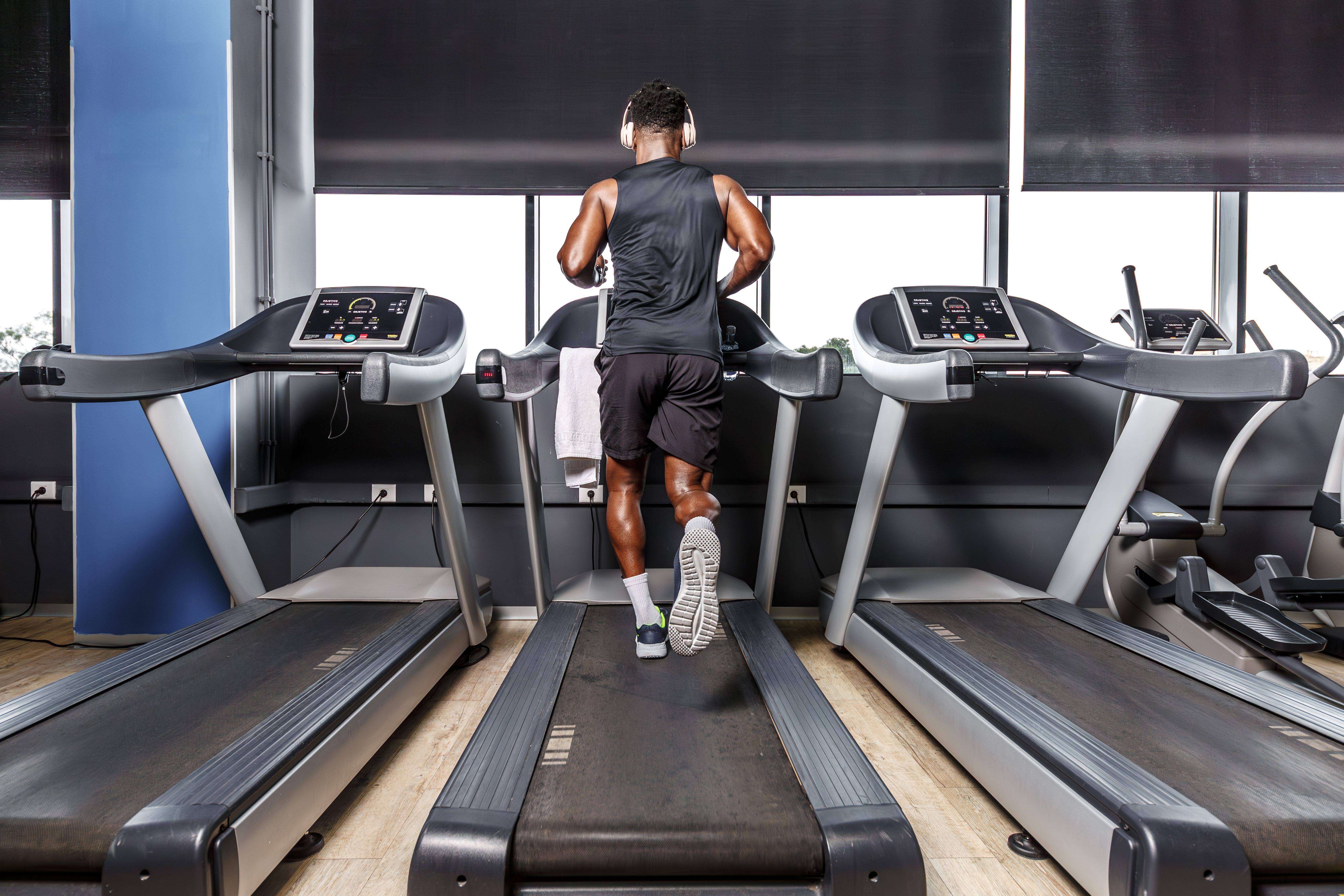
# 8 Treadmill Workouts Pro Runners Use to Build Performance
Professional runners treat the treadmill as more than a weather backup. They weaponize it for specific adaptations that transfer directly to outdoor racing.
The treadmill removes environmental variables. No wind resistance, no terrain changes, no pacing inconsistency from uneven surfaces. This controlled environment lets runners target precise physiological adaptations.
Interval training forms the backbone of pro treadmill sessions. High-intensity repeats at speeds slightly faster than race pace build VO2 max and lactate threshold. Runners typically execute 4-8 repeats of 800 meters to 2 kilometers with equal recovery periods. The treadmill's constant speed eliminates pacing drift that happens outdoors, forcing runners to commit to the target intensity.
Tempo runs represent another staple. These sustained efforts at comfortably hard paces develop the aerobic base and teach the body to clear lactate efficiently. A typical session runs 20-40 minutes at threshold pace, roughly 85-90% of max heart rate. The treadmill's stability lets runners nail this pace without overthinking each mile.
Hill simulation leverages the incline feature. Many pros run sustained climbs at 4-8% grade to build strength and running economy without impact stress that outdoor hill repeats create. A 20-minute hill workout at moderate intensity activates glute and quad muscles responsible for power generation.
Easy runs remain essential even indoors. Recovery pace work at 60-70% max heart rate improves aerobic capacity and preps the central nervous system for harder sessions. The treadmill's forgiving surface reduces injury risk during high-volume weeks.
Fartlek training brings playfulness to structured work. Runners alternate between set speeds or fast surges within longer runs, developing adaptability and mental toughness. The treadmill's preset controls simplify transitions between efforts.
Progression runs start easy and gradually accelerate to race pace over 45-60 minutes. This teaches runners to push hard when fatigued, mirroring late-race conditions. The treadmill eliminates excuses to slow down.
Cruise intervals combine steady effort with short hard surges. A 15-20 minute cruise interval at threshold pace includes 4-6 shorter bursts at VO2 max speed. This hybrid approach builds both speed and endurance simultaneously.
What separates pro approaches from casual treadmill running is intention. Every session targets a specific adaptation. Easy runs stay easy. Hard runs stay hard. No middle-ground jogging that trains nothing effectively.
The treadmill's quantifiable feedback accelerates learning. Runners see exact pace, distance, and heart rate data. This precision reveals which speeds correspond to specific effort levels and which adaptations respond to particular workouts.
Environmental consistency cuts both ways. While it removes training variables, runners must also practice outdoor running regularly to develop wind tolerance and pacing intuition. A balanced approach mixes treadmill structure with outdoor variability.
Mental toughness testing happens on the treadmill in ways outdoor running cannot replicate. The temptation to hit the stop button sits inches away. Runners who master hard efforts on treadmills develop discipline that translates to every running situation.