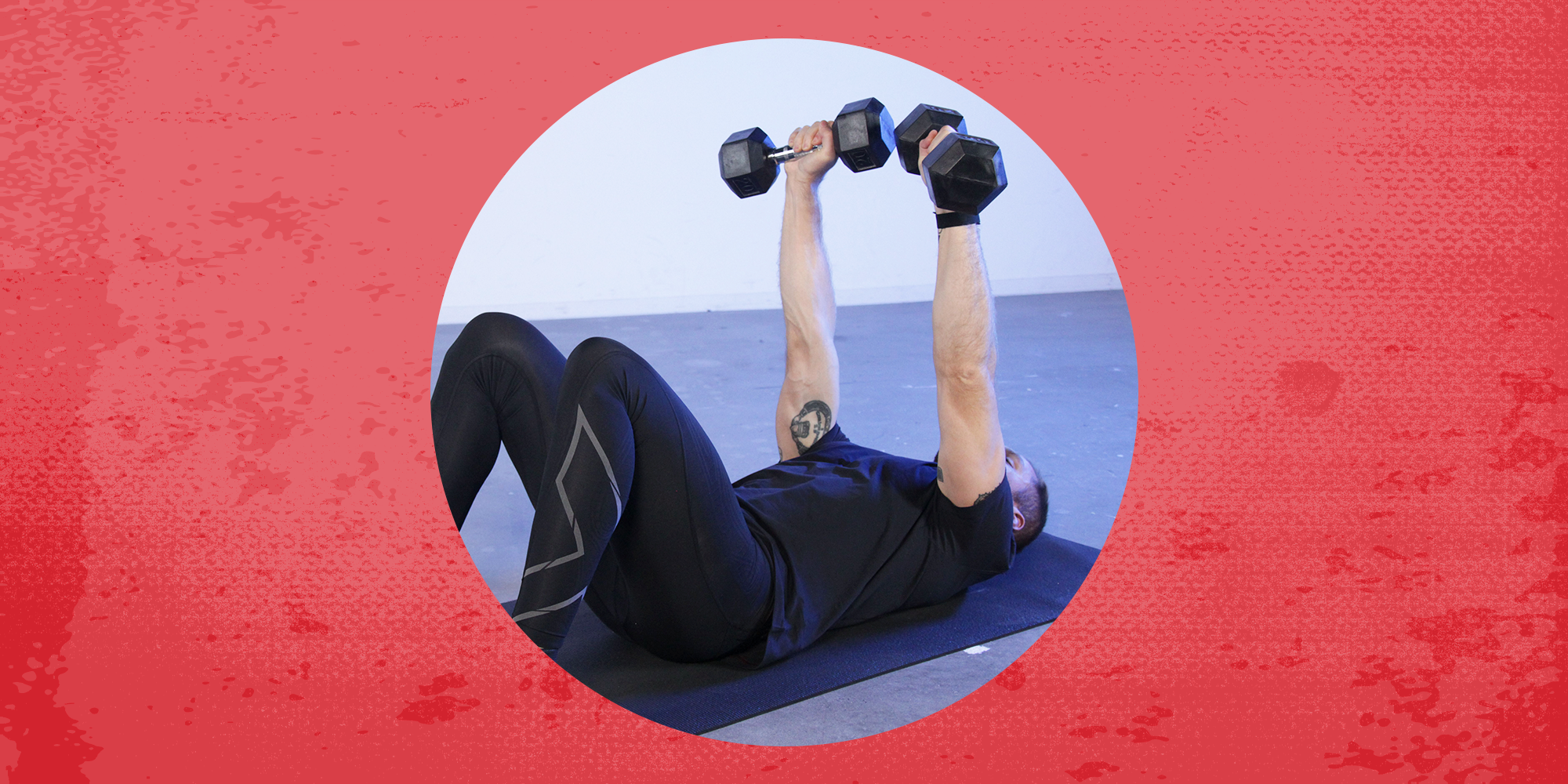
The floor press delivers chest strength gains while reducing shoulder strain. Unlike the traditional bench press, this exercise limits range of motion by keeping your back flat against the ground, which decreases stress on your shoulder joints and rotator cuff muscles.
Performed lying flat on your back with knees bent and feet planted on the floor, the floor press follows the same pressing pattern as the bench press. You lower a barbell or dumbbells until your elbows touch the ground, then press upward. This stopping point at elbow contact creates a built-in safety mechanism. The abbreviated range prevents excessive shoulder extension, the position that often triggers impingement and strain in pressing movements.
The floor press excels as a supplemental lift for bench press progression. It builds raw pressing strength in the chest and triceps without the overhead demands of full-range pressing. Research on pressing mechanics shows that limiting range of motion in chest exercises reduces anterior shoulder stress while maintaining strength development. Lifters can load heavier weights safely, which translates to strength carryover when returning to full-range movements.
The exercise also works well for lifters recovering from shoulder injuries or dealing with chronic pain. The ground contact eliminates the unstable variables of a bench, reducing the activation demands on stabilizer muscles around the shoulder joint. This makes it ideal for rehabilitation phases when full pressing capacity remains limited.
Setup requires minimal equipment. A barbell works best, but dumbbells offer excellent stimulus and allow each arm to work independently. Start with a weight approximately 85 percent of your bench press maximum. Perform 3 to 5 sets of 3 to 6 repetitions for strength development, or 3 sets of 8 to 12 reps for hypertrophy.
The floor press fits seamlessly into upper body programs. Use it as a main lift 1 to 2 times weekly, or